October 30, 2026


Celebrating community and the excitement of scientific curiosity, graduate students and faculty gathered in Rochester in October for the 37th annual Student Research Symposium.
37th Annual Student Research Symposium
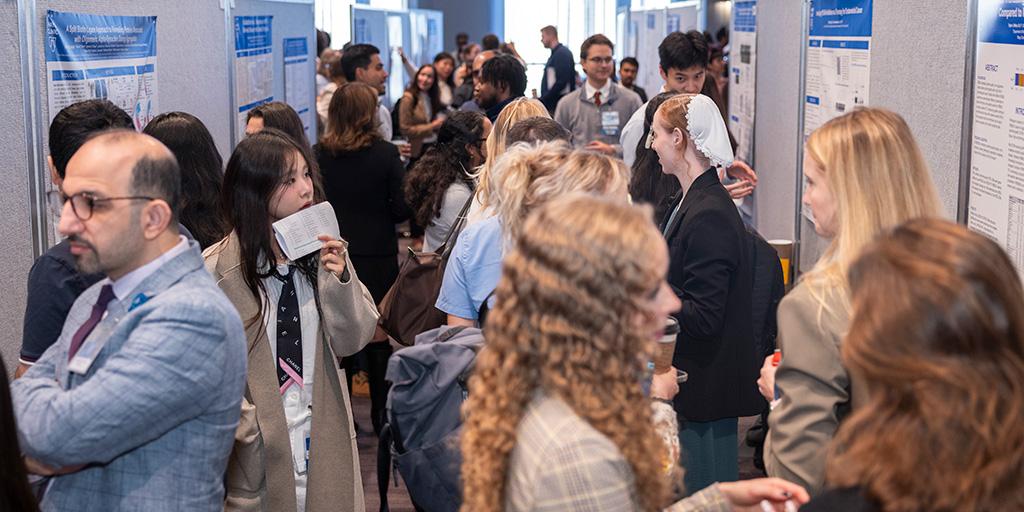
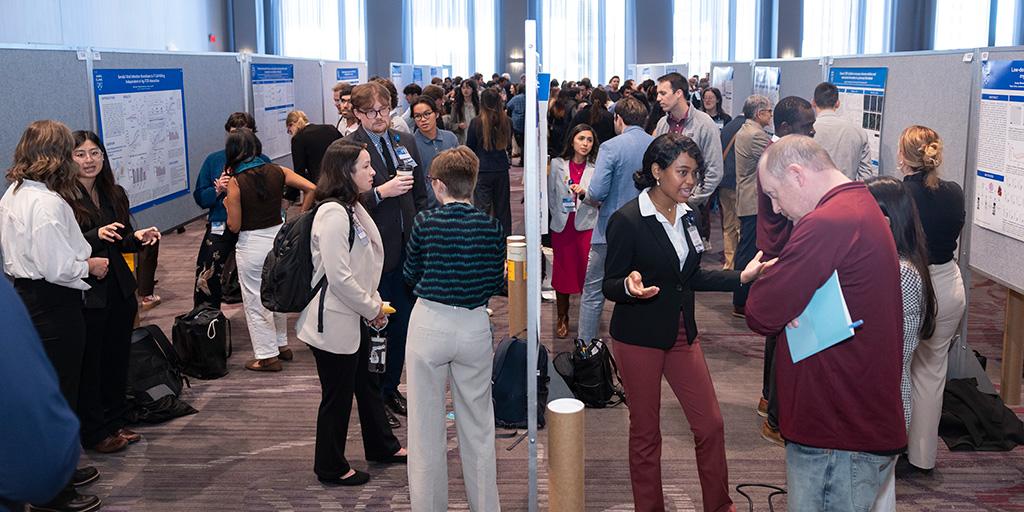
The event, hosted by Mayo Clinic Graduate School of Biomedical Sciences and the Graduate Student Association, brought together more than 225 Ph.D. and M.D.-Ph.D. students from all sites and across all graduate tracks. Throughout the day, students gave scientific talks and poster presentations, sharing their research-in-progress and their latest findings.
Gaining new insights
For students, the scientific talks, presentations and discussions sparked new ideas. Pamela Hammond, Ph.D., dean of engineering and institute professor at Massachusetts Institute of Technology, delivered the Distinguished Findling Lecture. She described her research developing a nanoparticle drug delivery mechanism that her team has tested in ovarian cancer cells and glioblastoma. Students and faculty responded to the lecture with enthusiastic questions about additional potential applications.
Eight students, selected from each graduate track, gave 15-minute scientific talks about their areas of research. Among the topics were new findings about epidural stimulation to address spinal cord injury and an investigation of placental tissue to find new biomarkers to predict autism in newborns.
"As a school, we're training the scientific workforce of the future," says Dr. Griffiths. "We're educating students to become independent researchers in their own right who will go on to do things that their mentors haven't even thought of at this point. There are going to be advances in science that we can't even predict yet that these students will eventually pioneer."
Making research concepts accessible to all
An animated staple of the symposium is the Three-Minute Thesis competition, an internationally held contest in which winners advance to regional and national rounds. This year, 10 students participated, each presenting their research using a single projected slide and lay terminology, aiming to win over a panel of nonscientist judges who included Mayo Clinic staff.
Biomedical engineering and physiology student Samanta Lopez impressed the panel (and voters in the audience) with a straightforward explanation of why her research matters: the need to widen the availability of transplantable livers. In a pithy, engaging presentation, she described her goal to develop digitally simulated livers, using data from organs available for donation, that can be tested in real time.