
/prod01/channel_2/media/mccms/content-assets/about/news/2026-jan-june/1024X512_Brain-Tumor-Physician-with-Patient-WF4320372_0029.jpg)
June 2, 2026


As national attention continues to focus on the urgent need for advances in brain tumor care, Mayo Clinic is preparing the next generation of physicians and scientists to change the future of treatment and research.
Across Mayo’s campuses, residents, medical students, and research trainees are working alongside internationally recognized experts to tackle some of the toughest questions in neuro-oncology, from understanding how tumors grow to developing more precise and personalized therapies.
In Mayo Clinic’s uniquely collaborative environment, discoveries in the lab are closely connected to the needs of patients and families facing brain tumors today. For these emerging doctors and scientists, the mission is deeply personal: improve outcomes, expand treatment options, and bring new hope to patients confronting life-altering diagnoses. Hear from several emerging doctors and scientists who are helping shape the future of brain tumor care.
Panos Kerezoudis, M.D.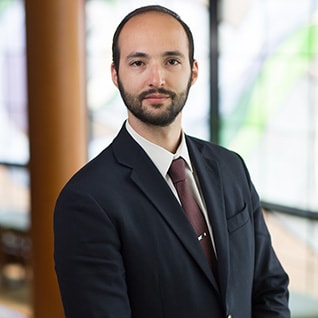
Neurosurgery resident, Mayo Clinic School of Graduate Medical Education, Mayo Clinic in Minnesota
My interest in brain tumors developed organically during my neurosurgical training, where these cases consistently present some of the most demanding challenges we face as surgeons. Mayo Clinic has been an exceptional place to train because the volume and complexity of cases here are matched by a genuine culture of academic rigor. As residents, we are expected to ask hard questions about the care we deliver and pursue the evidence to answer them.
The case that has shaped me most during residency involved a pregnant woman in her third trimester who presented with rapidly progressive vision loss from a large tumor above the pituitary gland that was compressing her optic nerves. The urgency was real — delay risked that she would have permanent blindness — yet every decision carried risk for both mother and unborn child. Being part of the multidisciplinary team that planned and performed her surgery, and then seeing her recover near-complete vision and later deliver a healthy baby, reinforced for me that neurosurgical outcomes are never just about the operation itself. They are the product of coordinated planning, careful decision-making and the infrastructure that surrounds the surgeon.
That experience has pushed me to include clinical outcomes research in my training — studying not just whether surgery works, but how we organize and deliver care around it. For brain tumor patients, that means asking questions like: Which surgical approaches lead to fewer complications? Which patients are most likely to benefit from early intervention? And how do we build care systems that give every patient the safest possible experience?
Evelyn Turcotte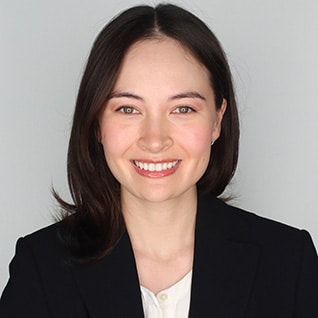
Medical student, Mayo Clinic Alix School of Medicine, Mayo Clinic in Arizona
I'm pursuing an M.D. degree through Mayo Clinic Alix School of Medicine and a master's degree through Mayo Clinic Graduate School of Biomedical Sciences, a combination that has positioned me to pursue my long-term goals of becoming both a neurosurgeon and translational researcher. Throughout medical school, my interests have evolved from neuro-oncology to include a broader focus on how technology such as artificial intelligence and robotics can impact neurosurgical care. Under the mentorship of Bernard Bendok, M.D., in the Precision Neurotherapeutics Lab, I have had the opportunity to explore emerging robotic technologies aimed at expanding access to specialized neurosurgical treatment.
Our research team is exploring how robotic systems could eventually allow expert neurosurgeons to perform or assist with certain procedures — such as removing a brain tumor or addressing a stroke — from a remote site. While these technologies are still in early stages of development, the broader vision is to create tools that can improve precision and ultimately help deliver advanced care to more patients regardless of geographic location. What excites me most about this work is the idea that innovation should not only advance what is technically possible but also broaden who can benefit from those advances as the technologies reach underserved or rural areas. As I prepare for neurosurgery residency, my hope is to contribute to the development and clinical translation of technologies that improve neurosurgical outcomes, increase access to expert care and offer patients and families greater hope during some of the most difficult moments of their lives.
Marissa Russo, Ph.D.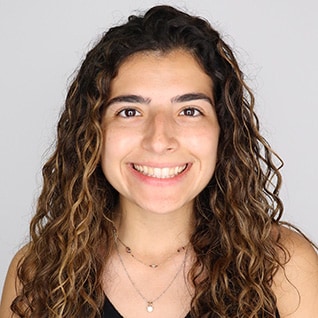
Recent graduate student, Mayo Clinic Graduate School of Biomedical Sciences; postdoctoral fellow in Neurosurgery, Mayo Clinic in Florida
I've always been interested in the brain and cancer biology. When I was applying to graduate school, I wanted to find a program where I could conduct translational research — making discoveries that can be applied to patient care. This year, I completed my Ph.D. in neuroscience and have begun a postdoctoral research fellowship at Mayo Clinic. My research with mentor Hugo Guerrero Cazares, M.D., Ph.D., has focused on understanding glioblastomas, which are among the most aggressive and lethal brain tumors. Our goal is to understand the biological factors that make these tumors so dire.
My studies have focused on small particles, known as extracellular vesicles, that are released by glioblastoma cells and contain molecules generated by the tumor. The molecules that are transported help the tumor "communicate" with the surrounding area in the brain. My research identified extracellular vesicle proteins that influence cell processes such as proliferation and migration, making the microenvironment more favorable for the tumor to grow. My wish is that studies like these will bring new hope. As we identify new pathways, we can then target them with new therapeutic strategies, ultimately making a difference in patients' lives.