
/prod01/channel_2/media/mccms/content-assets/about/news/2026-july-dec/1024X512_2026-CRISP-cohort-summer-internship-FL-WF9856450_0005.jpg)
July 7, 2026


Through CRISP (Clinical Research Internship Summer Program) at Mayo Clinic in Florida, students are contributing to the ARPA-H (Advanced Research Projects Agency for Health) PARADIGM (Platform Accelerating Rural Access to Distributed and Integrated Medical Care) initiative, a federal effort to expand access to high-quality care in rural and underserved communities.
Immersed in research, patient care and emerging technology, these scholars are gaining firsthand experience shaping artificial intelligence (AI)-powered tools while learning alongside the clinicians and engineers at Mayo Clinic who are reimagining healthcare delivery.
Last summer, two CRISP scholars, Brooke Zimmerman and Yashvi Patel, contributed to the project by supporting AI-guided training for procedures like phlebotomy, helping explore ways to upskill healthcare workers in resource-limited and rural settings. Hear more from these students about their experience with CRISP (Clinical Research Internship Summer Program) and how their work brought education, research, and patient care together.
CRISP scholars share experiences
Brooke Zimmerman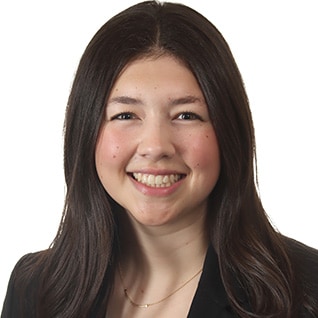
Third-year medical student, Florida State University College of Medicine
I was drawn to CRISP because, growing up in Jacksonville, I had always been exposed to Mayo Clinic but had never had the opportunity to work there. Being able to step into that environment and have one-on-one mentorship made for a unique experience. Working with W. David Freeman, M.D., and Leslie Simon, D.O., who are incredibly passionate about AI, opened my eyes to what the future of medicine could look like.
Before this experience, I had mostly worked on the back end of research, so being able to interact directly with patients was new for me. We were often the first point of contact, explaining the project, walking through informed consent, and helping patients feel comfortable and confident in their decision to participate. I learned how important it is to communicate complex ideas in a way that patients can truly understand while also building trust.
What stood out to me most was the level of patient engagement. Many patients were supportive of the research and genuinely excited to participate, which made the experience even more meaningful. At the same time, working closely with our mentors allowed us to continually refine how we approached recruitment and communication.
This project really brought together clinical care, research and education. It showed me how innovation through AI can not only advance medicine but also improve access and patient experience, especially in underserved communities.
Yashvi Patel 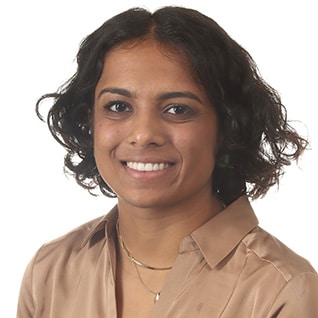
Medical student, Tulane University (beginning fall 2026)
I came into CRISP hoping to build on my early exposure to clinical research, but this experience pushed me into a much more impactful role. Being directly involved in patient intake for the ARPA-H project changed how I think about research at its earliest stages. Instead of working only with charts or retrospective data, I was part of explaining the study to patients, walking through consent, and recognizing the level of trust that process requires.
I had done clinical research before, but I never directly interacted with patients. The experience made me more attentive to variation. Individual patients don't fit neatly into the patterns a model is trained to expect, and we sometimes tend to forget that as researchers, but it's hard to forget when each patient is in front of you and you are explaining a clinical study to them.
Our mentors made sure we were fully informed about how this project came to be, what partners we were working with and each of the phases of the study. We were in the room when the engineers came to set up the equipment and while discussions were happening about how to best approach each part of the process.
It also shifted my perspective on AI in healthcare. What stood out was not just what the technology can do, but how important it is to design it around real clinical workflows and human interaction. Seeing that balance up close made the work feel both technically and personally meaningful.
CRISP cohorts on the Florida, Arizona and Rochester campuses began their 2026 internships in late May. CRISP is one of several pathways programs in the Office of Non-Clinical Education Programs that help expose promising students to Mayo Clinic education opportunities and career paths.
This research was funded, in part, by the U.S. Government. The views and conclusions contained in this document are those of the authors and should not be interpreted as representing the official policies, either expressed or implied, of the U.S. Government.