
Curriculum
/prod01/channel_2/media/mccms/content-assets/academics/health-sciences-training/occupational-therapy-internship-arizona/mccms-occupational-therapy-3644126_0021-tablet.jpg)
Trainee experience
The Occupational Therapy Physical Rehabilitation Fellowship will prepare you for professional practice through independent patient care opportunities. Learning experiences include:
- Mentored clinical time
- Didactics
- Scholarly projects such as community education, quality improvement, and/or research
- Learning and leadership development opportunities such as teaching, journal clubs, and community outreach
You will receive over 350 hours of dedicated time that includes didactics, labs, research time, and specialty observations that are integrated throughout the curriculum.
Clinical training and rotations
You will experience more than 1,800 hours of clinical practice and individual mentored time from highly-trained advanced board-certified occupational therapists. Many are board-certified specialists or specialty certified by the American Occupational Therapy Association (AOTA), Hand Therapy Certification Commission (HTCC), and/or Lymphology Association of North America (LANA).
Department and faculty
The fellowship is coordinated and taught by the clinical staff of Mayo Clinic's campus in Phoenix, Arizona. Faculty members are chosen for their commitment to teaching, clinical practice, and research.
Program leadership
Christopher Taylor, O.T., O.T.D., BCG
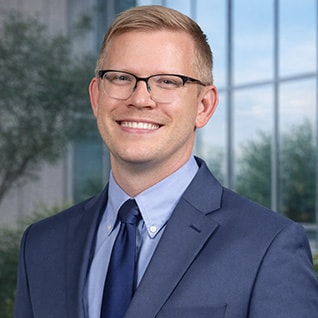
Primary Mentor - Outpatient
Christopher Taylor is an Occupational Therapist at Mayo Clinic in Phoenix, Arizona, where he also serves as Program Director for the Mayo Clinic School of Health Sciences. In this role, he oversees the Occupational Therapy Physical Rehabilitation Fellowship program.
Christopher earned his Bachelor of Science in Biology from the University of Georgia and his Doctorate in Occupational Therapy from Northern Arizona University. He holds advanced board certification in Gerontology and is a vestibular-certified therapist.
He is actively engaged in advancing Mayo Clinic’s three shields — clinical practice, research, and education. As a primary investigator, his work spans multiple areas including stroke rehabilitation, pain management, and balance rehabilitation. Christopher is an instructor with the Mayo Clinic College of Medicine and Science and a Fellow in Excellence in Administration and Leadership through the Academy of Educational Excellence. Additionally, he serves as Adjunct Program Faculty in the Department of Otorhinolaryngology at Mayo Clinic in Arizona and as part-time faculty at Northern Arizona University.
Christopher has presented both nationally and internationally on topics such as vestibular rehabilitation, knowledge translation, and upper extremity rehabilitation. He has been recognized for his contributions to education with the “Outstanding Capstone Mentor of the Year” award from Northern Arizona University and the “Preceptor of the Year” award at Mayo Clinic in Arizona.
Karissa Senterfitt, O.T., O.T.D., BCPR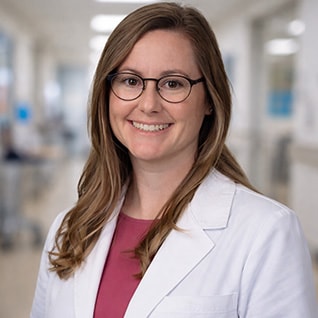
Primary Mentor - Inpatient/Acute Care
Karissa is an occupational therapist and instructor in the Department of Physical Medicine and Rehabilitation at Mayo Clinic in Phoenix, Arizona. She brings extensive clinical expertise in neurological rehabilitation, vestibular dysfunction, and acute and emergency care, with a strong focus on integrating evidence-based practice into complex clinical environments. She has been instrumental in expanding occupational therapy’s role in emerging practice areas, including the emergency department, and is committed to advancing high-quality, patient-centered care.
Karissa is a dedicated educator and mentor with a passion for developing the next generation of clinicians. She has mentored multiple Level II fieldwork students and practice scholars in research, guiding projects focused on outcome measurement in acute care and the evolving role of occupational therapy in the emergency setting. She contributes to both formal and informal education through didactic teaching, interdisciplinary training, and curriculum development at Mayo Clinic and institutions locally and abroad in Uganda.
As a fellowship mentor, Karissa is committed to fostering a supportive and collaborative learning environment grounded in trust, accountability, and professional growth. She emphasizes clinical reasoning, reflective practice, and the application of evidence to individualized patient care. Her mentorship approach encourages curiosity, resilience, and the development of leadership skills, preparing fellows to thrive in both established and emerging areas of practice while contributing meaningfully to the profession.
Gretchen Carney, O.T., C.H.T.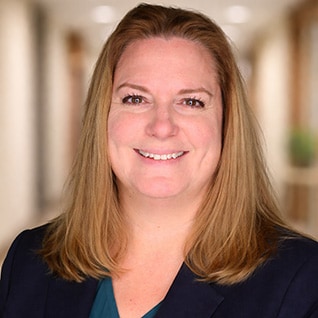
Primary Mentor - Hand Clinic
Gretchen Carney is a licensed occupational therapist and certified hand therapist with over 20 years of clinical experience. Her career started in Boston, Massachusetts, where she practiced as the lead therapist at a private orthopedic clinic specializing in conditions affecting the hand and upper extremity. She moved to Phoenix, Arizona, in 2021 and worked for Banner PT prior to getting hired at Mayo Clinic in 2024. She currently serves as a Certified Hand Therapist at Mayo Clinic's Phoenix campus.
Gretchen earned her Master's of Science degree in Occupational Therapy from Tufts University in Boston, Massachusetts in 2006. She became a Certified Hand Therapist in 2011. Gretchen has additional certifications in physical agent modalities, Kinesio taping and dry needling to enhance her treatment of conditions affecting the hand and upper extremity.
Gretchen has a strong commitment to clinical excellence and mentorship. As lead therapist in Boston, she has guided treatment standards while mentoring students and early-career therapists. She has continued her mentorship in Arizona supervising formal training programs for therapist seeking their certification in hand therapy as well as offering support in training other medical professionals in developing splinting skills for postoperative patients.
She is also a member of the American Society of Hand Therapist, American Occupational Therapy Association, and the Arizona Occupational Therapy Association.
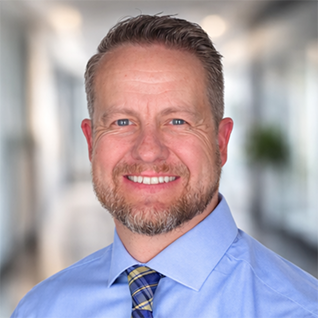 Robert Semingson, OT, CEAS
Primary Mentor - Pain Rehab
Robert Semingson is an occupational therapist and Instructor in Physical Medicine and Rehabilitation at the Mayo Clinic College of Medicine and Science. He has served Mayo Clinic in Phoenix, Arizona since 2005 and currently practices in the Pain Rehabilitation Center, where he specializes in the evaluation and treatment of individuals with chronic pain and complex functional limitations.
Robert earned his Bachelor of Science in Occupational Therapy from the University of North Dakota, completing clinical internships in physical disability/rehabilitation and psychosocial outpatient treatment. His professional interests center on pain neuroscience education, mindfulness-based interventions, neuroplasticity, and interprofessional approaches to pain management across the continuum of care, including ICU and outpatient rehabilitation settings.
He is actively engaged in education and professional development, contributing to curriculum delivery and clinical instruction within PM&R. His continuing education includes extensive training in therapeutic neuroscience education, chronic pain management, ethical documentation, burnout mitigation, and integrative, non-pharmacologic pain strategies. Robert is also committed to professional advocacy and leadership, participating in initiatives aligned with the American Occupational Therapy Association’s Vision 2025 and national efforts such as the Choosing Wisely campaign.
Facilities
Mayo Clinic's Arizona campus has two locations and five additional clinic sites. The Phoenix location includes the state-of-the-art Mayo Clinic Hospital, the first hospital entirely designed and built by Mayo Clinic. It has been recognized several times by Phoenix magazine as the Best Hospital in Phoenix.
The Phoenix location includes a 3,000-square-foot multidisciplinary simulation center, which simulates real-life patient care situations, enabling learners to practice on sophisticated mannequins in a no-risk environment. Experiential learning enhances patient safety and improves competency assessment of learners through new modes of simulation-based education.
This location also includes a state-of-the-art education and conference center, which has a 330-seat auditorium and adjacent meeting rooms. The facility serves all types of learners engaging in lifelong learning. Services in numerous medical and surgical disciplines are provided, including outstanding programs in cancer treatment and organ transplant.
Mayo Clinic’s location in Scottsdale is centered around a beautiful, five-story outpatient clinic. This modern facility contains extensive exam rooms, an outpatient surgery center equipped for general anesthesia, a full-service laboratory, pharmacy, patient education library, endoscopy suite, and a 188-seat auditorium for patient, staff, and student education programs.
The Arizona branch of the Mayo Clinic Alix School of Medicine is located here, along with extensive research facilities. The Samuel C. Johnson Research Building, a 75,000-square-foot building, houses scientists, trainees and students focused on molecular genetics, molecular immunology, molecular and cell biology, molecular chemistry, and surgical research.
Evaluation
Mayo Clinic School of Health Sciences uses these evaluative tools:
- Written examination
- Demonstration of skills
- Self-assessment exercises
- Faculty reviews
Mayo Clinic's system of evaluation provides students and faculty with a comprehensive look at individual performance. This allows faculty and administrative staff to direct students who are experiencing academic difficulty to the appropriate support resources, including tutoring programs and counseling opportunities.