
Curriculum
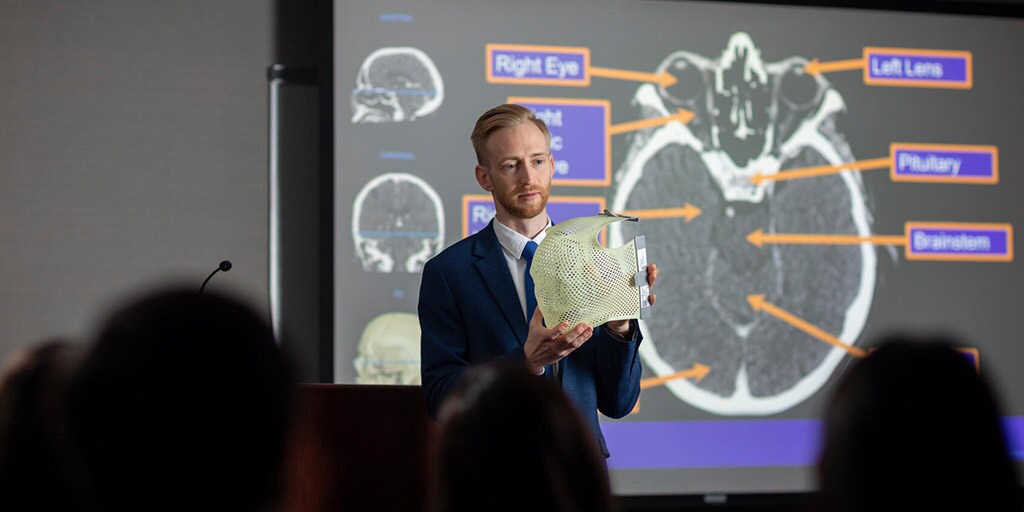 Clinical training
The Advanced Radiation Oncology Fellowship has flexibility in order to fit the clinical needs and professional goals of individual trainees. You rotate with appropriate consultants for your areas of interest. The rotations generally last two months and are disease site oriented.
During clinical rotations, you are directly involved with the evaluation, workup and treatment of new patients. This includes doing complete histories and physical examinations; getting acquainted with the important pathological, radiological and clinical features involved with patients' malignancies; and presenting patients and treatment approaches to staff physicians.
In addition, during clinical training, you are expected to:
- Participate in the care of patients seen by staff physicians for malignant and non-malignant conditions
- Develop an overall understanding of the management of malignant diseases and some non-malignant conditions that use radiation therapy
- Acquire knowledge about the epidemiology, natural history, presentation and clinical findings, anatomical considerations, staging evaluation, and system of each malignancy type
- Develop treatment approaches for each tumor type and understand the complications and outcomes expected for treatment
- Learn the technical skill required in the treatment of patients through direct involvement in the simulation, planning, and treatment delivery including brachytherapy or other procedural skills as applicable to each patient
- Participate in the follow-up evaluation of patients who have completed therapy and learn about expected outcomes for the disease, as well as the complications associated with treatment
Senior Resident Associate
A unique opportunity for interested fellows is a rotation where fellows function semi-independently as a Senior Resident Associate, or SRA.
During this block, the SRA is the primary caregiver for patients, sees patients on their own, develops a treatment plan under the supervision of a faculty member, and is responsible for delivering the care. Through the treatment process, the SRA is the leader in the patient's care; they integrate therapists, dosimetrists, and support staff, as well as dieticians and other medical specialties.
Didactic Training
The didactic portion of the fellowship includes:
- Tuesday and Thursday Morning Case Conference
- Core Curriculum conferences
- Annual Talk on an aspect of cancer management or research
- Morbidity & Mortality conferences
- Subspecialty Conference (Journal Club)
- Cancer Center Grand Rounds
- Systems-based practice and quality improvement conferences
- Radiobiology course, both staff-led and biennial visiting professor (optional)
- Radiation Physics course (optional)
A comprehensive core curriculum course covering all aspects of oncology care is taught weekly by staff from different specialties within Mayo Clinic including radiation and medical oncology, surgical specialties, neurology, statistics, pathology, and radiology.
Additionally, you will participate in many combined conferences and tumor boards. Fellows are required to attend relevant tumor boards while on service and frequently present cases at tumor boards.
Research training
Fellows are encouraged to participate in a research project during their fellowship. This may be basic science, translational or clinical in nature. The project should have the potential for publication and presentation. As this is a clinical fellowship, there are no dedicated research blocks during the program.
Evaluation
To ensure you gain proficiency and develop the corresponding technical skills, your performance is monitored throughout the Advanced Radiation Oncology Fellowship. You are formally evaluated by your supervising faculty member after completing each clinical rotation. You meet with the program director to review the evaluations. In addition, you regularly evaluate the faculty to ensure your educational goals are being met.