
Research Pathway
Between the first and second year of fellowship, one of the five categorical fellows per class can dedicate an extra year of training to research. The research year, during which no clinical duties are assigned, is in addition to the three clinical years of training.
During the research year, the fellowship provides a continued stipend and benefits, and this time may be used for basic (bench) or clinical research.
Positions
There is one position available each year on a competitive basis in the Cardiovascular Diseases Research Pathway Fellowship at Mayo Clinic in Phoenix/Scottsdale, Arizona.
Qualifications
To apply to the Cardiovascular Diseases Fellowship, you must have completed three years of an American Board of Internal Medicine (ABIM) accredited training program.
Also see Admissions to Mayo Clinic School of Graduate Medical Education.
How to apply
You must apply through the Electronic Residency Application Service (ERAS). Appointments to this program are made via the NRMP Specialty Match. For complete details on requirements and the application process, visit the Electronic Residency Application Service or contact your medical school dean's office.
Applications for each academic year should be completed by Sept. 1 of the year preceding the program start date (approximately eight months in advance). The academic year begins on July 1.
If you're considered for an appointment, you will be invited to visit Mayo Clinic for a personal interview with the program director and selected faculty. Interviews are conducted in September through November of each year prior to the match date.
Also see
From the associate program director
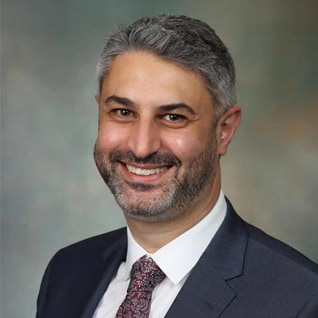 Mayo Clinic in Arizona’s Cardiovascular Disease Fellowship offers a dynamic and highly collaborative research environment grounded in Mayo Clinic’s longstanding commitment to discovery and innovation. Fellows have access to world-class faculty mentors, robust institutional resources, and multidisciplinary partnerships across Mayo Clinic’s campuses, fostering meaningful scholarly engagement across the full spectrum of cardiovascular medicine.
Our program actively supports research initiatives among the fellows across all levels of experience, tailored to career interest, with supportive mentorship and protected time.
From clinical and outcomes research to translational science and cutting-edge innovation, including artificial intelligence applications, our program empowers fellows to pursue impactful research that advances knowledge and transforms patient care.
Chadi Ayoub, M.B.B.S., Ph.D.
Associate Program Director