
Meet our Fellows
The Gastroenterology and Hepatology Neoplasia Fellowship draws trainees from across the U.S. and around the world. While all our trainees have a love of learning and a compassionate approach to patient care, they come from diverse backgrounds, family status, and professional and personal interests. Meet our current current fellow and learn about their experience in the program.
Wilfor Diaz Fernandez, M.D., M.C.
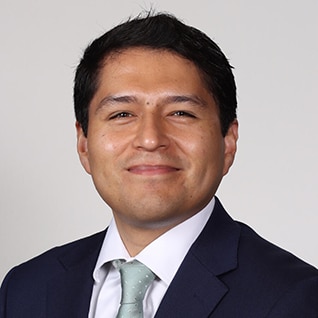 What attracted you to gastroenterology?
I was drawn to gastroenterology because no two days are the same. One day you're managing a life-threatening GI bleed, and the next you're helping prevent cancer through advanced endoscopy. I enjoy the combination of hands-on procedures, complex clinical decision-making, and the opportunity to build long-term relationships with patients.
As my training evolved, I found myself increasingly fascinated by gastrointestinal neoplasia and the potential to do more than diagnose disease—to detect it earlier, characterize it more precisely, and even prevent cancer altogether. That's what ultimately shaped my career interests.
What attracted you to Mayo Clinic for fellowship training?
Mayo Clinic's reputation for exceptional patient care, research, and education initially caught my attention, but it was the people and the culture that convinced me this was where I wanted to train. The opportunity to learn from faculty who are advancing therapeutic endoscopy and gastrointestinal cancer care every day is something that's difficult to find anywhere else.
When I arrived for my Esophageal Diseases Fellowship, I thought I knew what it meant to practice academic medicine. A year later, I realized how much my perspective on academic medicine had evolved. I like to call it the "Mayo effect." You're surrounded by people who constantly challenge you to ask better questions, think more critically, and always look for ways to improve patient care. It's an environment that raises your expectations—not because anyone tells you to, but because excellence becomes the standard around you.
What makes Mayo Clinic Neoplasia Fellowship unique?
What makes this fellowship unique is that innovation isn't something happening in a separate lab or building—it's woven into everyday clinical practice. One day you're caring for patients with complex gastrointestinal neoplasia, and the next you're discussing how new imaging technologies, biomarkers, or research findings could change the way we detect and treat these diseases.
For me, that's exactly the environment I was looking for. My passion is early cancer detection, particularly in Barrett's esophagus and esophageal adenocarcinoma, and the fellowship gives me the opportunity to pursue those interests while working alongside leaders who are constantly asking, 'How can we do this better?'
Having already trained within Mayo's Esophageal Diseases group, I've seen firsthand how collaboration drives innovation. Gastroenterologists, surgeons, pathologists, oncologists, radiologists, and researchers work together so seamlessly that it almost feels like everyone speaks the same language. That culture not only advances patient care but also inspires fellows to think beyond today's standard of care and help define the future of gastrointestinal oncology.
Did anything surprise you about Mayo Clinic's program?
What surprised me most was how personal the training feels. Before coming to Mayo Clinic, I expected a world-class institution with incredible resources—which it certainly is—but I didn't expect it to feel so approachable. Despite its size and reputation, the faculty know you by name, genuinely invest in your development and encourage you to keep growing. I was also impressed by how naturally specialists from gastroenterology, surgery, oncology, pathology, and radiology work together. It turns out that at Mayo, multidisciplinary care isn't just a buzzword—it's simply how things get done.
What does your future look like right now?
Right now, my future looks a lot like what brought me to Mayo in the first place: curiosity, innovation, and a lot of endoscopy. My goal is to build a career in academic gastroenterology with a focus on gastrointestinal neoplasia, particularly Barrett's esophagus, early cancer detection, and advanced endoscopic therapies that interrupt the progression from precancer to cancer. I'm excited by the idea of combining patient care with research to develop better ways to detect disease earlier, personalize treatment, and improve outcomes. Along the way, I hope to mentor future trainees, collaborate with colleagues across disciplines, and contribute to advancing the field. If I can help prevent even a few patients from ever hearing the words, "you have cancer," I'll consider that a career well spent.
What is living in Rochester, Minnesota, like for you?
Living in Rochester has been a genuinely positive experience. It’s a welcoming, safe community where almost everything is just a few minutes away—which means less time in traffic and more time doing the things that matter. The pace of life makes it easy to stay focused during training, while the parks, trails, and changing seasons provide a great opportunity to recharge. It may be quieter than a big city, but that's part of its charm. And if you ever miss the excitement of urban life, Minneapolis is just a short drive away. Overall, Rochester has been a great place not only to train, but also to build a balanced and fulfilling life.