
Meet Our Fellows
The Pancreatology Fellowship draws trainees from across the U.S. and around the world. While all our fellows have a love of learning and a compassionate approach to patient care, they come from diverse backgrounds, family status, and professional and personal interests.
Krystal Mills, M.B.B.S.
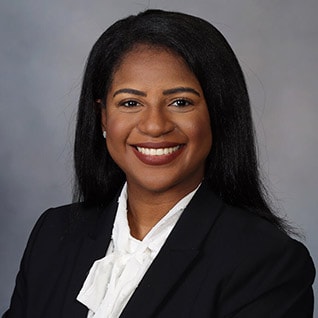 Medical school: Faculty of Medical Sciences, University of the West Indies, Mona Campus
Residency: Morehouse School of Medicine (Internal Medicine Residency and Chief Medical Resident)
What attracted you to gastroenterology? My interest in gastroenterology is both personal and professional. Having had family members affected by gastrointestinal malignancies, pursuing gastroenterology as a career has given me the opportunity to be on the other side of the patient experience and make a meaningful difference in the lives of others facing similar challenges. Professionally, I have developed a strong interest in the early detection and prevention of pancreatic cancer, an area with a significant unmet need. This continues to drive my clinical and research interests as I work toward improving outcomes for patients with high-risk pancreatic diseases.
Why did you choose Mayo Clinic for fellowship training? Mayo Clinic represented everything I was looking for in fellowship training including an environment where clinical excellence, education and research are equally valued. Training at Mayo Clinic has allowed me to care for patients with a broad spectrum of rare and complex gastrointestinal diseases from around the world, while always embracing the institution's commitment to putting the needs of the patient first. As I developed a focused interest in pancreatology, I was fortunate to receive exceptional mentorship and access to the resources.
What makes the Mayo Clinic Pancreatology Fellowship unique? The fellowship offers an unparalleled breadth of experience in medical pancreatology. We care for patients with chronic pancreatitis, recurrent acute pancreatitis, hereditary pancreatic disorders, pancreatic cysts, autoimmune pancreatitis, pancreatic cancer and individuals at high genetic or familial risk for pancreatic disease. As a major international referral center, Mayo Clinic provides exposure to both common and exceptionally rare pancreatic disorders, which is difficult to find in training elsewhere. Equally unique is the collaborative, multidisciplinary environment which creates opportunities to participate in translational and clinical research that directly advances patient care.
What does your future look like right now? My goal is to continue to build an academic career focused on medical pancreatology. Clinically, I hope to care for patients with pancreatic diseases while developing programs that improve access to specialized care. Through my research, I aim to advance the early detection of pancreatic cancer and improve the care of patients with chronic pancreatic diseases. I also hope to mentor future trainees, contribute to national gastroenterology societies and help advance the field through collaborative research and innovation. In the long run, I want my career to be defined not only by the patients I care for, but also by the discoveries and systems of care that improve outcomes for patients long into the future.