
/prod01/channel_2/media/mccms/content-assets/academics/residencies-and-fellowships/cardiovascular-pathology-fellowship-minnesota/meet-our-trainees/Trejo-Lopez-Jorge-14954010-202007071129.jpg)
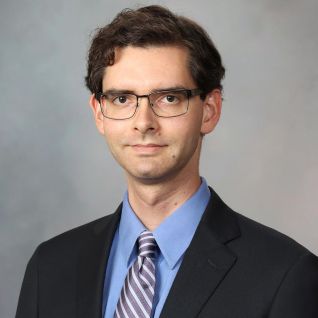
Jorge Trejo-Lopez, M.D.
Program Director
Assistant Professor of Laboratory Medicine & Pathology
Consultant in Laboratory Medicine & Pathology
/prod01/channel_2/media/mccms/content-assets/academics/residencies-and-fellowships/cardiovascular-pathology-fellowship-minnesota/meet-our-trainees/Neuropathology-Meet-the-Faulty-1024X512-WF5605095-0011.JPG)
Mayo Clinic's Department of Laboratory Medicine and Pathology is one of the largest clinical laboratories in the world. It is composed of more than 3,200 individuals working in 40 specialty laboratories performing more than 20 million tests a year. A highly skilled team of medical professionals works collaboratively. This includes physicians, scientists, medical technologists, technicians, lab assistants, and other specialists. The department receives specimens for testing from Mayo Clinic and Mayo Clinic Health System. It also serves as a reference laboratory for clinics and hospitals nationally and internationally.
The Division of Anatomic Pathology has 60 pathologists, with specialty expertise in all areas of surgical pathology. The division is organized around working groups dedicated to specific organ systems. Members also contribute to general service areas, including the frozen section lab, autopsy, and cytology. The Neuropathology Section includes 7 sub-speciality certified neuropathologists, all of whom will be directly involved in your education.
The annual volume of neuropathology specimens at Mayo Clinic's campus in Rochester, Minnesota, includes more than 3,000 neurosurgical biopsies. It also includes 600 autopsy brains, 650 skeletal muscle specimens, 425 peripheral nerve specimens, and 200 eye specimens. These encompass the full spectrum of common and rare neoplastic and non-neoplastic pathology entities. This includes surgical, autopsy, skeletal muscle, peripheral nerve, and ophthalmic pathology.
The division is supported by a full-service histology and immunohistochemistry laboratory. It also includes active genetics, genomics, and electron microscopy services. Genetics and genomics laboratories perform next-generation sequencing, chromosomal microarray, whole genome methylation profiling, and in situ hybridization studies. These resources are available for routine practice on a daily basis. Trainees learn appropriate and efficient testing, as well as how to integrate results to guide patient care.
Welcome to the Mayo Clinic Neuropathology fellowship program! Our mission is to help you learn the foundational skills needed for a productive and rewarding career in neuropathology. We believe Mayo Clinic is a unique institution where patients' interests are central to everything we do. We collaborate closely with experts across pathology, molecular genetics, neuroradiology, neurosurgery, neurology, and neuro-oncology. This multidisciplinary approach gives fellows a well-rounded understanding of their role in patient care.
The practice offers a high volume of diverse and complex cases. These cases help residents and fellows develop expertise in common and rare diseases. This robust environment helps residents and fellows develop expertise in common and rare neoplastic and non-neoplastic diseases. Our extensive testing platforms provide broad diagnostic experience. This includes immunohistochemistry, electron microscopy, next-generation sequencing, chromosomal microarray, and whole-genome methylation profiling. Trainees evaluate complex cases using advanced technologies. This supports accurate diagnoses aligned with current practice standards.
Autopsy neuropathology training is enhanced by materials from hospital autopsies and the Southern Minnesota Regional Medical Examiner's Office. Training also draws from research endeavors, including the Mayo Clinic Alzheimer's Disease Research Center. Fellows complete dedicated rotations in ophthalmic, skeletal muscle, and peripheral nerve pathology. They work closely with nationally recognized experts in these specialties.
Our core faculty are highly engaged in education. The curriculum emphasizes one-on-one teaching, hands-on learning, active mentorship, and graduated responsibility. Faculty members are actively involved in basic, translational, and clinical research. Please explore this website to learn more about the opportunities available, and feel free to reach out with questions. They encourage fellows to participate in meaningful projects aligned with their areas of interest.
Thank you for your interest in our program!
Jorge Trejo-Lopez, M.D.
Program Director
One of the greatest advantages to training at Mayo Clinic is the approachability, accessibility, and collegiality of the faculty. Our faculty are committed to teaching and facilitating the growth of medical knowledge. Many of our faculty members have published and lectured extensively and are highly regarded in their fields.
Jorge Trejo-Lopez, M.D.
Program Director
Assistant Professor of Laboratory Medicine & Pathology
Consultant in Laboratory Medicine & Pathology
/prod01/channel_2/media/mccms/content-assets/academics/residencies-and-fellowships/cardiovascular-pathology-fellowship-minnesota/meet-our-trainees/Raghunathan-Aditya-WF1523116-0008.jpg)
Aditya Raghunathan, M.D., M.P.H.
Associate Program Director
Associate Professor of Laboratory Medicine & Pathology
Consultant in Laboratory Medicine & Pathology
/prod01/channel_2/media/mccms/content-assets/academics/residencies-and-fellowships/cardiovascular-pathology-fellowship-minnesota/meet-our-trainees/Nguyen-Aivi-21678219-202008170429.jpg)
Aivi Nguyen, M.D.
Assistant Professor of Laboratory Medicine & Pathology
Consultant in Anatomic Pathology
/prod01/channel_2/media/mccms/content-assets/academics/residencies-and-fellowships/cardiovascular-pathology-fellowship-minnesota/meet-our-trainees/Reichard-Robert-15650359-202111030916.jpg)
R. Ross Reichard, M.D.
Associate Professor of Laboratory Medicine & Pathology
Consultant in Anatomic Pathology
/prod01/channel_2/media/mccms/content-assets/academics/residencies-and-fellowships/cardiovascular-pathology-fellowship-minnesota/meet-our-trainees/Vaubel-1623635-3879643-0076.jpg)
Rachael Vaubel, M.D., Ph.D.
Assistant Professor of Laboratory Medicine & Pathology
Consultant in Laboratory Medicine & Pathology
/prod01/channel_2/media/mccms/content-assets/academics/residencies-and-fellowships/cardiovascular-pathology-fellowship-minnesota/meet-our-trainees/Vizcaino-Villalobos-Adelita-21402710-20230829.jpg)
Maria Adelita Vizcaino Villalobos, M.D.
Assistant Professor of Laboratory Medicine & Pathology
Senior Associate Consultant in Laboratory Medicine & Pathology