
/prod01/channel_2/media/mccms/content-assets/about/news/2026-july-dec/1024X512_internal-medicine-resident-physician-consult-1493434_3691695_0046.jpg)
October 15, 2026


Mayo Clinic pathway programs support learners at every stage of their educational journey. This story on undergraduate enrichment is the second in a two-part series highlighting how those opportunities help students translate their interests into careers in medicine, science and healthcare.
Mayo Clinic Pathway Programs
In high school, a single experience can spark an interest in healthcare. As students advance into college, those interests often become more focused questions: What kind of physician, scientist, or healthcare professional do I want to be? What experiences will help me get there?
Through Education’s pathway programs such as the Summer Undergraduate Research Fellowship (SURF), Undergraduate Plummer Scholars (UPS) and UPS+, Clinical and Research Internship Study Program (CRISP), and others, Mayo Clinic provides undergraduate students with opportunities to explore those questions through research, mentorship and professional development experiences across its campuses.
"Education's undergraduate pathway experiences help students turn possibility into purpose," says Nneka I. Comfere, M.D., Waugh Executive Dean of Education. "By connecting students with these meaningful opportunities at pivotal moments in their educational journeys, we're preparing talented learners for what comes next while developing the physicians, scientists, and healthcare leaders we'll need for the future."
For many participants, the impact of undergraduate-focused pathway programs extends well beyond a single summer.
Coming back to Mayo Clinic
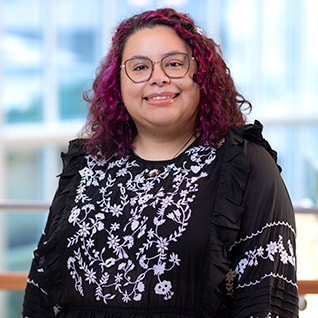 When Lizz Cervantes participated in SURF in Rochester in 2021, it was the start of a much longer relationship with Mayo Clinic. At the time, she was studying biochemistry at the University of Texas at San Antonio and already knew she wanted to pursue a Ph.D. What she discovered during SURF was where she wanted that training to take place.
During the program, Cervantes worked alongside graduate students whose collaborative approach to science and mentorship left a lasting impression.
"If I want to grow into that kind of scientist, I should train where they trained," she recalls thinking.
Today, Cervantes is a fifth-year Ph.D. candidate in the Clinical and Translational Science program at Mayo Clinic Graduate School of Biomedical Sciences. The fellowship experience that first introduced her to Mayo Clinic ultimately influenced her decision to return as a graduate student.
Inspired by her own time in the program, she helped establish and now helps lead a graduate student-led professional development seminar series for current participants. Several former SURF students have since told her that the series played a role in their own decisions to apply to continue their studies at Mayo Clinic.
"Sometimes a single opportunity can shape your future in ways you never expected," Cervantes says.
Seeing new possibilities
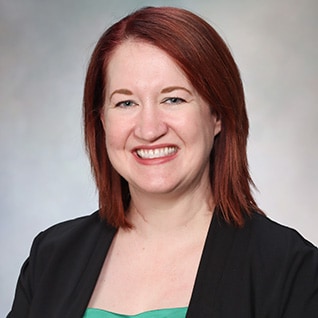 For Tamiel Turley, Ph.D., the path to biomedical research looked different from many of her peers.
After leaving high school at 16, earning her GED, raising a family and becoming a first-generation college student, she wasn't certain she belonged in the world of academic science. That changed during her 2015 SURF experience at Mayo Clinic in Florida.
"Working alongside established investigators, fellows and clinician-scientists helped me realize that I not only enjoyed research, but that I could actually see myself pursuing a Ph.D. and building a career as a scientist," Dr. Turley says.
Since then, she has earned her Ph.D. from Mayo Clinic Graduate School of Biomedical Sciences in Rochester and built a career as a research associate in Florida, leading projects focused on translational oncology, biomarker discovery, and precision medicine.
Dr. Turley encourages those interested in pathways programs not to worry about fitting a particular mold.
"You do not need to have a perfect academic path or your entire career figured out," she says. "That one summer helped open a door to opportunities I could not have imagined at the time."
Relationships that last
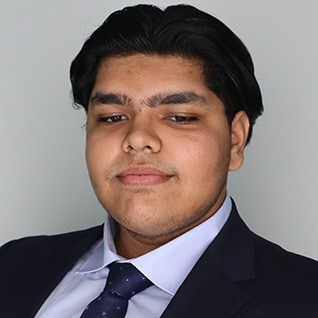 The connections Fardin Khan made through Mayo Clinic's Undergraduate Plummer Scholars (UPS) Program also continued long after his experience ended.
While he was a student at The City College of New York, Khan participated in the UPS Program, where he visited Mayo Clinic's medical school and hospital in Arizona and connected with physicians and medical students. The experience gave him a firsthand look at careers in medicine while introducing him to mentors who would help guide his next steps.
As Khan prepared for the medical school application process, he continued to rely on those relationships for advice and support.
"The program provides valuable mentorship that guides first-generation students through the medical school application cycle," Khan says.
Since completing the program, Khan, now a medical student in Mayo Clinic Alix School of Medicine has continued serving patients from diverse backgrounds and populations, including as a student leader with REACT (Refugee Education and Clinic Team), drawing on relationships he first developed through Mayo Clinic to support that work.
Khan encourages other students to consider applying for a Mayo Clinic pathways program.
"It is a once-in-a-lifetime opportunity that gives a unique look at Mayo Clinic like nothing else will," he says.
Continuing the journey
While the stories of Cervantes, Turley, and Khan began in different places and took different paths, each led them back to Mayo Clinic.
As new cohorts of undergraduate students arrive in pathway programs each summer, they bring their own questions about where their futures might lead. Some will leave with research experience. Others will discover new interests, lasting mentors or unexpected opportunities.
A few years later, some may find themselves right back where they started, this time as graduate students, medical students, researchers and even Mayo Clinic colleagues.