Meet The Faculty
Our radiologists and staff in the Department of Radiology at Mayo Clinic's campus in Phoenix, Arizona, is fully integrated with all the medical services available at Mayo Clinic, working closely with many other medical and surgical specialties to ensure the needs of our patients come first. Our large number of cases, integrated with ongoing research and education, results in wide-ranging expertise in the imaging and treatment of diseases affecting patients of all ages.
A message from the program director
The Nuclear Radiology Fellowship Program at Mayo Clinic in Phoenix/Scottsdale, Arizona, is a one-year, ACGME-accredited clinical fellowship that provides advanced training in nuclear medicine, molecular imaging, and radionuclide therapy across both outpatient and inpatient settings. The program is designed to deliver rigorous clinical and academic subspecialty education through close collaboration with faculty in nuclear medicine, diagnostic radiology, oncology, and related disciplines. Upon completion of the fellowship, graduates are eligible to pursue subspecialty certification in Nuclear Radiology through the American Board of Radiology and certification through the American Board of Nuclear Medicine, as applicable.
Program Highlights
- Comprehensive clinical curriculum: The fellowship provides structured training in diagnostic nuclear radiology, molecular imaging, and radionuclide therapy, with emphasis on clinical judgment, patient safety, and technical proficiency.
- Extensive subspecialty exposure: Fellows gain experience across a broad spectrum of contemporary imaging modalities and therapeutic applications, including PET/CT, PET/MR, SPECT/CT, nuclear cardiology, and theranostic practice.
- Multidisciplinary academic environment: The program is closely integrated with radiology, medical oncology, endocrinology, urology, surgical oncology, and medical physics, supporting collaborative patient care and interdisciplinary learning. There is combined reading of nuclear cardiology studies with nuclear cardiologists.
- Theranostics and dosimetry training: Fellows participate directly in diagnostic and therapeutic pathways, with exposure to radiology-led theranostics and dosimetry workflows that reflect evolving practice models in the field.
- Scholarly and educational development: Faculty mentorship supports participation in clinical research, quality improvement, teaching, and academic dissemination through conference abstracts and manuscripts publication at h peer-reviewed journals.
- Leadership preparation: Graduated responsibility and involvement in teaching and program activities foster professional development for future roles in academic and subspecialized practice.
- Innovation-oriented training: The fellowship emphasizes emerging radiotracers, protocol development, and advances in theranostics workflows within a clinically relevant academic setting.
- Robust PET experience: More than 8,000 PET scans per year, including oncological, cardial, neurological and infection/inflammation PET/CT & PET/MR, etc.
- Faculty expertise: Nine (9) dual board-certified or subspecialty-certified nuclear radiologists whose clinical practice is complemented by active engagement in research and education. The program is further supported by nuclear medicine physicists and PET radiochemist.
Facilities
- Siemens Quadra whole-body PET/CT scanner
- Two GE Discovery MI PET/CT scanners
- One GE 3 Tesla PET/MR scanner
- Five SPECT/CT scanners and one dedicated SPECT scanner
- Two D-SPECT scanners for nuclear cardiology
- Cyclotron and Ge68/Ga68 generators
- Xodus G8 small-animal PET/CT scanner
In summary, the Nuclear Radiology Fellowship at Mayo Clinic in Arizona offers a rigorous academic and clinical training environment characterized by advanced imaging resources, multidisciplinary collaboration, and meaningful opportunities for scholarship. The fellowship is designed to prepare physicians for subspecialized practice and academic leadership in nuclear radiology, molecular imaging, and theranostics.
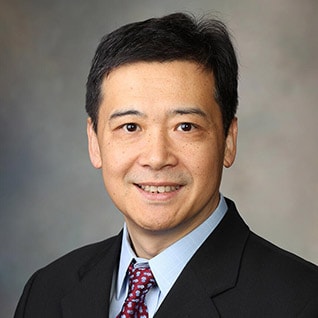
Ming Yang, M.D.
Nuclear Radiology Fellowship Program Director
Faculty
One of the greatest advantages to training at Mayo Clinic is the approachability, accessibility and collegiality of the faculty. In addition to caring for patients in clinical practice, Mayo Clinic's faculty is committed to teaching and facilitating the growth of medical knowledge. Many of our faculty members have published and lectured extensively and are highly regarded in their fields.
You work closely with these individuals throughout your training in the Nuclear Radiology Fellowship at Mayo Clinic in Phoenix, Arizona.
|
|
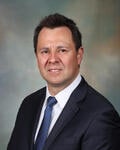
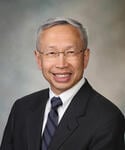
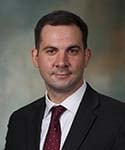
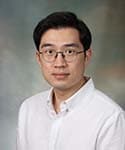
Felipe Martinez, M.D.Nuclear Medicine Division Chair Dr. Martinez is the division chair for the Division of Nuclear Medicine at Mayo Clinic in Phoenix, Arizona. |
|
|
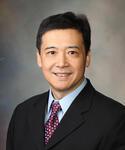
Ming Yang, M.D.Program Director Dr. Yang is the program director of the Nuclear Radiology Fellowship. His clinical interests include PET/CT, PET/MRI, and molecular imaging. |
|
|
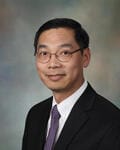
Steve Huang, M.D., Ph.D.Assistant Professor of Radiology Dr. Huang is a core faculty member with clinical interests in general nuclear medicine, nuclear cardiology, neurological imaging, and oncologic PET/CT imaging. |
|
|
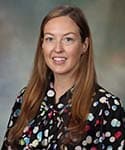
Mary Ellen Koran, M.D., Ph.D.Assistant Professor of Radiology Dr. Koran is a core faculty member with interests in amyloid PET, Tau PET, FDG PET of the brain, PET imaging of dementia and neurodegenerative disease, imaging genetics of Alzheimer’s disease. |
|
|
Ba Nguyen, M.D.Associate Professor of Radiology Dr. Nguyen is a core faculty member with clinical interests in general nuclear medicine, nuclear cardiology, endocrine and neuroendocrine tumors, and oncologic PET/CT imaging. |
|
|
Jeremiah Sanders, Ph.D., M.S.Assistant Professor of Medical Physics Dr. Sanders is a medical physicist and expert in integrating new image-guided diagnostic and therapeutic technologies into clinical practice. He is actively involved with designing and implementing new imaging protocols, developing and evaluating clinical AI and CAD software, and patient-specific dosimetry for theranostics. |
|
|
Clifford Shin, M.D., PhD.Assistant Professor of Radiology Dr. Shin is a core faculty member with clinical interests focusing on the advancement and application of nuclear radiology techniques, with particular emphasis on PET/MRI and radiotherapeutics including dosimetry. His research primarily explores oncological applications in nuclear radiology, including gliomas, multiple myeloma, gastrointestinal and genitourinary tumors. |