
/360x0:1080x720/prod01/channel_2/media/mccms/content-assets/academics/residencies-and-fellowships/anesthesiology-critical-care-medicine-florida/mccms-anesthesiology-critical-care-fellowship-WF7143450_0030-2.png)
Overview
The Anesthesiology Critical Care Medicine Fellowship at Mayo Clinic’s campus in Florida provides comprehensive training designed to develop future physician leaders through diverse clinical, research, and educational experiences.
Fellows benefit from close mentorship by experienced faculty in an environment that fosters professional growth, scholarly activity, interdisciplinary collaboration, and a commitment to innovation and excellence in patient care.
Our fellowship offers a rigorous experience in a highly supportive and multidisciplinary training environment. Our fellows train in a hands-on fashion in cardiac, surgical, neurological, and medical intensive care and learn to lead the ICU team in a busy, tertiary care setting. Our training program has a high degree of exposure to cardiac, lung, liver, and kidney transplantation, ECMO, LVAD, RVAD, and mechanical circulatory support, as well as training the fellow in the technical skills and procedures necessary to insert and maintain invasive monitors and support in critically ill patients.
In addition to comprehensive clinical experiences, fellows will enjoy a full didactic schedule, participate in mentored research projects, and receive structured training in quality improvement. Upon graduation, our fellows will be ready to lead the next generation of intensive care teams caring for our most critically ill patients.
Unique program highlights include:
- Robust experience in transplant critical care
- Robust experience with mechanical circulatory support
- Strong procedural experience
- Structured training in critical care ultrasound
- Structured training in transesophageal echocardiography
full-time faculty
faculty to trainee ratio
trainees accepted annually
Explore the fellowship
Learn more about the program's accreditation and certification
Accreditation, certification
Accreditation
The program fulfills the training requirements as defined by the American Board of Anesthesiology and is accredited by the Accreditation Council for Graduate Medical Education (ACGME).
Certification
After completing this fellowship, you are eligible to take the certifying Critical Care Medicine examination offered by the American Board of Anesthesiology.
Application process
Positions
Two positions are available on a competitive basis each year in the Anesthesiology Critical Care Medicine Fellowship at Mayo Clinic’s campus in Jacksonville, Florida.
Our ideal candidate is a highly motivated anesthesiology or emergency medicine resident seeking to become a comprehensive intensivist capable of providing high-level care across a broad range of critical care settings and clinical situations. The program is particularly focused on the management of highly complex critically ill patients, with extensive exposure to advanced mechanical circulatory support and ECMO, solid organ transplantation, complex respiratory failure and ventilator management, and severe shock states. Candidates should also be motivated to develop as clinicians, scholars, and educators through active participation in research, quality improvement, scholarly activity, and the education of learners across the multidisciplinary critical care environment.
Qualifications
Applicants for the Anesthesiology Critical Care Medicine Fellowship program must have completed an Accreditation Council for Graduate Medical Education (ACGME) accredited anesthesiology program.
Surgeons who have completed an ACGME-accredited general surgery residency are encouraged to apply and are eligible for American Board of Surgery certification in Surgical Critical Care through this fellowship.
Exceptional international medical graduates who have completed an anesthesiology residency in their home country and are ECFMG-certified may be considered on a case-by-case basis and should contact the program directly before applying.
Also see general admissions requirements.
How to apply
The academic year begins July 7.
The application and all supporting documentation must be submitted by Dec. 31 of the year preceding the program start date.
Our fellowship participates in the third-party application service SF Match, and all applications must be sent through their application portal.
Applications must include the following:
- Common Application Service (CAS) application
- Personal information form
- Required supplemental form
- Personal statement
- Three reference letters*
*One letter must be from a training program director or chair. Additional letters should come from physicians who know the applicant well and can speak directly about their professionalism, clinical skills, and readiness for fellowship training. It is preferable that at least one of these letters be from an intensivist who has worked closely with the applicant.
Please refer to the SF Match website for a list of the rules and regulations governing the conduct of program directors and applicants.
Exceptions to SF Match
Positions may be offered early before final rank lists are due as an exception-to-the-match position. This process is outlined in the match rules and regulations set forth by the Society of Critical Care Anesthesiologists (SOCCA). Email us if you have questions or need clarification on the process to be offered a position as an exception to the SF Match. You can also review the match exception policies put out by the SOCCA Program Director’s Advisory Council (PDAC).
Curriculum
Clinical training
Our didactic curriculum includes weekly lectures, grand rounds, and journal clubs covering the full spectrum of topics relevant to critical care medicine. Sessions are taught by our diverse faculty, co-fellows, and invited speakers. This series ensures that fellows develop a strong foundation in critical care, remain current with evolving evidence and best practices, and are well prepared for independent practice and board certification.
The curriculum is anchored by three weekly sessions:
- Core curriculum lecture: a small-group session focused on clinically applicable topics
- Grand rounds: a broad lecture spanning clinical, research, and emerging topics
- Journal club and board review: alternating sessions that deepen fellows' command of the literature and prepare them for the written boards
We supplement this weekly schedule with special conferences throughout the year on key topics:
- Critical Care Bootcamp (start of year): prepares incoming fellows for their first clinical rotations
- Ventilator Workshop (fall): advances fellows' mastery of mechanical ventilation
- ECMO Workshop (winter): hands-on simulation of cannulation and ECMO management
Additional didactic opportunities are offered throughout the year, including specialty conferences, visiting professor lectures, simulation sessions, and other educational activities aligned with fellows’ clinical rotations and interests.
Fellows spend the majority of their clinical time in our Core ICUs on the cardiac critical care (CVTx) and surgical critical care (TxCCS) service lines, with supplemental rotations in the medical (MICU) and neurosciences (NSICU) intensive care units.
Throughout the year, fellows are fully supported as learners and can count on progressive independence, with the goal of confidently leading the critical care team on every service line.
Rotation schedule
| Rotation | Length |
|---|---|
| CVTx | 5 months |
| TxCCs | 3 months |
| Medical ICU | 1 month |
| Neuro CCM | 1 month |
| Elective | 3 months |
Rotation descriptions
CVTx: CVTx is a core rotation. On the CVTx rotation fellows will care for cardiac surgical, cardiac, and thoracic ICU patients. CVTx will include training in caring for mechanical circulatory support and ecmo patients.
TxCCS: TxCCS is a core rotation. On the TxCCS rotation fellows will care for surgical ICU patients, liver transplant, and kidney transplant patients.
MICU: MICU is a supplemental rotation. On the MICU rotation fellows will care for patients with complex medical illness including bone marrow and stem cell transplantation, malignancies, and medical complications of transplant.
NSICU: NSICU is a supplemental rotation. On the NSICU rotation, fellows will care for patients with complex neurological illness and post-neurosurgery. On the NSICU rotation, fellows will gain familiarity with the monitoring devices and specialized treatment for neurocritical care.
Electives, procedures
Electives
Elective time is designed to support individualized professional development. Fellows work with program leadership to use this time strategically, aligning elective experiences with the clinical skills, procedural training, scholarly interests, and career goals most relevant to their intended practice.
We offer advanced transesophageal echocardiography (TEE) for fellows seeking the training needed to pursue NBE board certification.
Procedures
Fellows are not required to keep procedural logs for standard ICU procedures. However, they may choose to do so for future employment credentialing.
Our fellows will perform airway management, intubation, central line placement, arterial line placement, thoracostomy tube placement, bronchoscopy, tracheostomy, echocardiography, ECMO cannulation, pacemaker management, temporary pacemaker insertion after pacemaker management, and other ICU procedures on a regular basis.
Fellows who wish to pursue advanced TEE board certification will need to log all level 1 and level 2 exams for a total of 300 TEE exams.
Research opportunities
Fellows will participate in a faculty-mentored research project with assistance and oversight by the vice chair of research and the research chief fellow. Prior to matriculation, fellows will have a conversation with the research chief fellow to understand their research background, goals, and plans. Incoming fellows will be paired with a faculty mentor prior to matriculation to allow time for study design and IRB approval.
During the fellowship year, each fellow will present his or her research project in the fall at the Acute Care Research Consortium conference and identify his or her target meeting for presentation. Each fellow will have the goal of an abstract submission and presentation at a national meeting during the fellowship year.
Teaching opportunities
Each fellow will be encouraged to participate in teaching others during clinical activities as well as during didactics. Each fellow will be expected to present at grand rounds and core curriculum once during the year. Each fellow will be expected to present at journal club at least once, but more likely more than once.
Fellows seeking education leadership will have the opportunity to apply to become the education chief fellow and play a role in the design and execution of didactic teaching throughout the year.
Call frequency
All work hours will be compliant with ACGME work hour rules. ICU morning sign-out starts at 6:45 a.m., and evening sign-out ranges from 6-6:30 p.m. All overnight call duties will be based on night float system.
Mentorship, evaluation
Mentorship
Each fellow will be assigned a faculty mentor who can assist them in navigating the complex processes of fellowship, professional development, and seeking faculty positions. Additional mentorship will be provided by the chief fellows and the program director.
Evaluation
To ensure that you acquire adequate knowledge and develop the appropriate technical skills to meet program expectations, your performance is monitored carefully during the program. You are evaluated formally by the supervising faculty member after each clinical rotation, and you will meet with the program director to review these evaluations. In addition, you will also regularly evaluate the faculty to ensure that your educational needs are being met.
Facilities and locations
Trainees will spend the majority of their clinical and educational time in the Mayo Building, the central hub of the program’s daily activity. Within this space, fellows have access to dedicated work areas designed for focused study and collaboration. The building also features well-equipped call rooms and modern conference spaces that support teaching, team discussions, and patient care coordination.
Mayo Clinic has also opened a state-of-the-art gym and wellness center in the Vincent Stabile building, designed to support trainees’ physical and mental well-being. The facility offers modern equipment, dedicated spaces for group fitness, and resources that encourage healthy habits amid demanding clinical schedules. It reflects Mayo’s commitment to fostering a balanced, sustainable training environment where fellows can thrive both professionally and personally.
Message from the program director
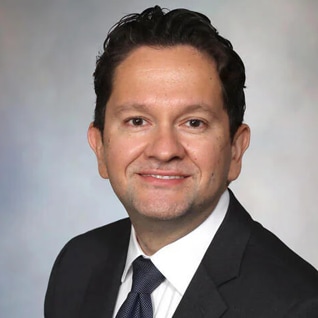
"There must be adjustment of education to the individual." (Charles H. Mayo, 1931)
Nearly a century later, that principle still guides us. Our aim is to shape your fellowship around your interests and goals. So, when we meet, my first question will be: what are you passionate about, and how can we help you get there?
Mayo Clinic in Florida is one of the busiest transplant centers in the country, and our fellows care for a high volume of heart, lung, and solid organ transplant patients; the sickest of the sick. In our state-of-the-art specialized intensive care units, you will be an integral part of the team from day one. Our goal is to train intensivists who are unfazed by any patient they may encounter, and, beyond that, to develop leaders who will innovate, shape, and advance the future of critical care medicine.
As an independent critical care medicine department, we train you as an intensivist in your own right. That structure is uncommon, and it is deliberate: it reflects our belief that critical care is a specialty unto itself. Our faculty bring different clinical backgrounds to the ICU, but once there, those distinctions fall away; we think, teach, and care for patients as one. That diversity strengthens both the care we deliver and the education we provide, preparing you to practice confidently in any setting, from the community to the most specialized academic units.
Through all of it, we hold to a simple standard: the needs of the patient come first. Talk with your patients, and spend time with them, the way you would want an intensivist to spend time with you or your family. Always do the right thing, even when it is hard. That is the intensivist we hope you will become.
We look forward to getting to know you and hope you will consider joining us.
Ricardo Diaz Milian, M.D.
Anesthesiology Critical Care Medicine Fellowship Program Director
Program leadership and faculty
Explore the department's educational environment and meet the faculty who help guide and support fellows throughout their training.
Department and faculty
The Department of Critical Care Medicine is a free-standing department at Mayo Clinic in Jacksonville, not housed within other departments such as Anesthesia, Medicine, or Surgery. This gives us the ability to focus on issues relevant to critical care and critical care faculty and learners without focusing on other parts of the practice. This has given us space and opportunity to build a world class education environment for our critical care fellows.
The Department of Critical Care Medicine is multidisciplinary and interfaces with APPs, nurses, pharmacy, and respiratory therapists to provide comprehensive care for our patients. We care for a high volume of complex cardiac and thoracic surgery patients, heart and lung transplant, as well as abdominal transplant, complex abdominal surgery, medical, and neurocritical care patients. Our fellows are central to our teams and to patient care serving as “the hub of the wheel.” Care teams are fellow-led, and care is guided by critical care fellows as they learn the independent practice of critical care medicine.
Meet the faculty
The Department of Critical Care Medicine faculty comes from a wide variety of clinical backgrounds, including anesthesiologists, emergency medicine, internal medicine, nephrology, neurology, and pulmonology. This mixture of faculty allows our fellows to experience the individual strengths and talents of different specialties in critical care.
Our faculty are unified in the single-minded goal of training fantastic intensivists from our group. We each strive to promote fellows to think and work independently on rounds, lead the multidisciplinary team, and learn the full gamut of critical care techniques and procedures necessary to care for our patients.
Learning to be an intensivist is a difficult challenge. You must learn to be a leader, a diplomat, and work with narrow margins and closing windows of time. The reward is to be able to successfully care for the sickest of patients and be their physician when they need a good physician most of all. Our faculty will work hard to help you learn all you need to learn to do this job expertly.
Faculty
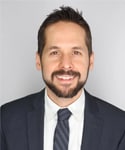 |
Andre Gosling, M.D.Associate Program Director Medical school: Universidade Federal de Minas Gerais Residency: Tufts Medical Center, Tufts University Fellowship: Beth Israel Deaconess Medical Center, Harvard Medical School (Critical Care) / Duke University Hospital (Cardiothoracic Anesthesiology) Areas of clinical interest: Acute kidney injury, vasoplegia, mechanical circulatory support About me: I am originally from Belo Horizonte, Brazil, where I attended medical school. I completed my anesthesiology residency and served as chief resident at Tufts Medical Center, followed by fellowship training in critical care medicine at Beth Israel Deaconess Medical Center/Harvard Medical School and cardiothoracic anesthesiology at Duke University Hospital. Following fellowship training, I joined the faculty at the University of Alabama at Birmingham, where I later served as director of medical student education and assistant director of the anesthesiology residency program. My clinical and research interests focus on perioperative outcomes in patients undergoing cardiac surgery, with particular emphasis on vasoplegia and acute kidney injury. I enjoy spending time with my wife and two children and am passionate about endurance sports. |
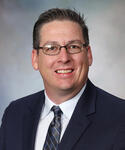 |
Sean Kiley, M.D.Medical school: University of Florida College of Medicine Residency: University of Florida College of Medicine Fellowship: University of Florida College of Medicine Areas of clinical interest: Pre- and post-operative care of heart and lung transplant, mechanical circulatory devices, management of ARDS and advance mechanical ventilation strategies, advanced heart failure management, post operative management of cardiac surgery About me: I am Florida born and raised. I love all outdoor things. My family includes my wife of 28 years and counting and two mostly grown children. And I think dogs are the best. |
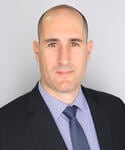 |
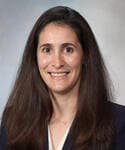
Nick Rubel, M.D.Medical school: Mayo Clinic Alix School of Medicine Residency: University of Wisconsin Hospitals and Clinics Fellowship: University of Wisconsin Hospitals and Clinics Areas of clinical interest: eCPR, ECMO transport, resuscitative TEE About me: I am a critical care physician who works in the cardiovascular/cardiothoracic ICU. My background is in emergency medicine, with 10 years of pre-hospital experience as a firefighter-paramedic prior to entering the medical field. During my residency and fellowship training, I flew with the University of Wisconsin MedFlight program and was a member of the eCPR program. When not participating in work-related activities, I'm generally spending time with my wife and two children at the beach / surfing. |
 |
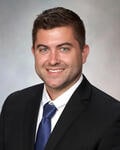
Anna Shapiro, M.D.Medical school: University of Vermont College of Medicine Residency: University of California San Diego Fellowship: Stanford University Medical Center Areas of clinical interest: Mechanical circulatory support, heart transplantation, lung transplantation, cardiogenic shock About me: I joined Mayo Clinic in 2020. I split my time between the Department of Anesthesiology and the Department of Critical Care Medicine. I currently serve as the medical director of the Cardiothoracic ICU (CVTx). In my free time, I enjoy cooking, tennis, hiking, skiing, and spending time with my husband and two children. |
 |
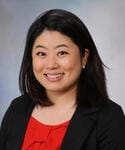
Michael Smith, M.D., M.S.Medical school: University of Florida Residency: New York Presbyterian Hospital - Columbia University Medical Center Fellowship: Medical University of South Carolina Areas of clinical interest: Perioperative medicine, perioperative anemia management, mechanical circulatory support About me: I'm the medical director for the Preoperative Evaluation Clinic and have a strong interest in perioperative medicine and use this to help bridge quality gaps in the ICU. Outside of work I'm a big Gators fan and everything related. |
 |
Dora Syin, M.D.Medical school: John Hopkins University School of Medicine Residency: John Hopkins University School of Medicine Fellowship: John Hopkins University School of Medicine Areas of clinical interest: CVTICU, clinical education, patient-centered care, health equity About me: I love being an anesthesiologist intensivist and being able to work in both the OR and ICU. Outside of work, I really enjoy nature and wildlife, gardening, spending time with family/friends, my pets, traveling, and food. |
Wellness initiatives
As a trainee, your physical and mental health are priorities to Mayo Clinic and the department. Trainees have access to several resources to promote well-being, as well as time off clinical duties to attend appointments.
- Fitness centers
- Groups on campus
- Well-being
Fitness centers
 Mayo Clinic residents or fellows can experience 24/7 free access to the Bill Hewitt Employee Wellness Center — opened in the summer of 2024 and spans 6,700 square feet with modern cardio machines, weight machines, free weights, a studio for live classes, and includes showers and locker rooms for convenience.
Additionally, residents or fellows at our three campuses get discounted membership fees to area gyms. In Jacksonville, Florida, residents and fellows can obtain an exclusive discount with the YMCA (several locations).
Groups on campus
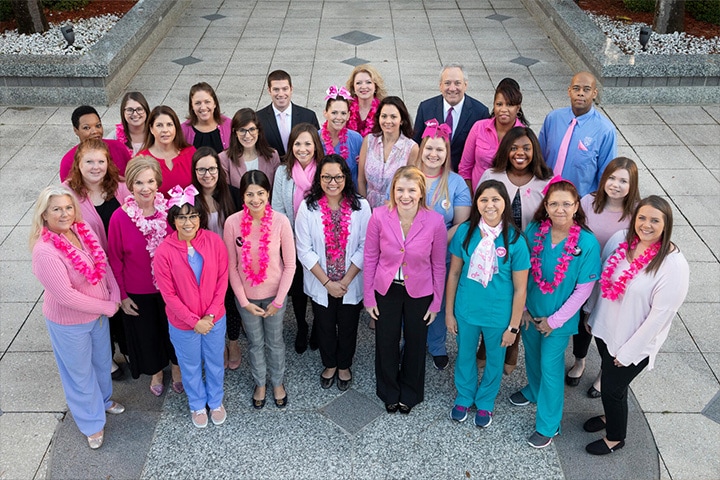
Opportunities to join a variety of groups on campus provide regular social activities and can help enhance your training while connecting with a broad group of peers.
Trainees will have the opportunity to join a Mayo Employee Resource Group (MERG) at any time during their training program. Mayo Employee Resource Groups (MERGs) are employee-led affinity groups to promote belonging, increase cultural awareness, and foster an environment of respect and inclusivity. Any Mayo Clinic employee can join a group of interest and choose their level of involvement
Well-being
 The Office of Academic Support and Well-Being provides resources to promote academic, emotional, social, cognitive, financial, and physical well-being. Career and academic services include academic advising, peer tutoring, and accommodations for learners with disabilities or health conditions. Mental health services, counseling, interview practice, and a variety of enrichment sessions on topics like budgeting, resiliency, and stress and burn-out are also available through the Academic Support and Well-Being office.
Belonging
At Mayo Clinic, we foster an inclusive working environment and embrace the diversity of all our trainees, faculty, staff, and patients. Our Office of Belonging offers tremendous resources to support our mission of maintaining a welcoming atmosphere for all our employees, including our learners. We strive to provide culturally appropriate care and do our part to reduce healthcare disparities.
Mayo Fellows Association (MFA)
The Mayo Fellows Association (MFA) offers a peer and social support network for residents and fellows and their families with social events, athletics, and advocacy. The MFA also holds an annual resident and fellow appreciation event open to all trainees with complimentary massages, stress-reducing activities, and social support.
More from Mayo Clinic School of Graduate Medical Education
/0x0:512x512/prod01/channel_2/media/mccms/content-assets/academics/residencies-and-fellowships/3319834_0363-512X512.jpg)
Choosing Mayo Clinic
/0x0:512x512/prod01/channel_2/media/mccms/content-assets/shared-documents/campus-FL-Jax_Davis_Bldg_Mar2003_R-pic-tile.jpg)
Jacksonville, FL
/0x0:512x512/prod01/channel_2/media/studio-sites/mccms-reference-guide/512X5121676671_3824027_0010_C.jpg)
/0x0:440x220/prod01/channel_2/media/mccms/content-assets/campus-amp-community/florida/440X220_sidebar-mayo-clinic-jacksonville-fl-shu244045420.jpg)