
/134x0:667x533/prod01/channel_2/media/mccms/content-assets/academics/residencies-and-fellowships/radiation-oncology-clinical-medical-physics-res-fl/rad-onc-clin-med-phys-res-fl-WF8849425-0051.jpg)
Overview
The Radiation Oncology Medical Physics Residency at Mayo Clinic in Jacksonville, Florida, is a 24-month program (with optional extension up to 36 months for integrated research, declared before the start of the program). The program is designed to provide real-world, hands-on clinical training in a structured, supportive and safety-focused environment. Built around Mayo Clinic's primary value—the needs of the patient come first—the program emphasizes the practical skills, clinical judgment, and professional accountability required to deliver the highest standards of patient care in modern radiation oncology.
Program highlights
As a resident in the Radiation Oncology Clinical Medical Physics Residency, you will train alongside and learn from more than 20 dedicated ABR-certified medical physicists. The curriculum is intentionally immersive: residents participate in day-to-day clinical operations while progressively assuming greater responsibility as competency is demonstrated. Training is grounded in direct clinical exposure and mentorship, ensuring residents develop confidence and independence.
Unique and noteworthy aspects of the program include:
- Intensive CAMPEP-accredited clinical training, under the close supervision of experienced radiation oncology physicists, over two or three years, in a large, state-of-the-art radiation oncology center with diverse treatment techniques and modalities for conventional, benign, TBI, TSE, SBRT, SRS, IORT, HDR Gynecological Brachytherapy, I-131 radionuclide therapy, and clinical trial patients. In addition, the construction of a dedicated brachytherapy suite will be underway in the next couple of years.
- Structured curriculum providing comprehensive didactic and hands-on educational experiences in all clinical aspects of radiation oncology physics.
- Research training and experience through mentored projects culminating in the development of clinical protocols, opportunities to present at national and international meetings, and peer-reviewed scientific publications.
- Opportunities for collaboration with world-renowned clinicians in the fields of radiation oncology, radiation physics, medical oncology, surgery, radiology, and pathology.
- Increasing levels of clinical responsibility to ensure that you can practice independently upon program completion.
/prod01/channel_2/media/mccms/content-assets/academics/residencies-and-fellowships/radiation-oncology-clinical-medical-physics-res-fl/rad-onc-clin-med-phys-res-fl-WF8849425-0037.jpg)
Accreditation, certification, program statistics, application process
Learn about the program's accreditation, certification, statistics, and application process.
Accreditation, certification
Accreditation
The Radiation Oncology Clinical Medical Physics Residency at Mayo Clinic is accredited by the Commission on Accreditation of Medical Physics Educational Programs (CAMPEP).
CAMPEP
1631 Prince Street
Alexandria, VA 22314
Phone: 571-298-1239
Learn more about Mayo Clinic School of Graduate Medical Education.
Certification
Upon successful completion of the program, graduates receive a certificate of completion from Mayo Clinic School of Graduate Medical Education.
Graduates are eligible to take the Therapeutic Medical Physics board exam through the American Board of Radiology (ABR).
Program statistics
| Program statistics by year | 2025 | 2024 | 2023 | 2022 | 2021 |
|---|---|---|---|---|---|
| Applicants | 2 | Program paused | Program paused | Program paused | Program paused |
| Admitted/entered | 2 | - | - | - | - |
| Number completing program | 0 | - | - | 1 | - |
| Destination after graduation | - | - | - | 1-Academic | - |
Application process
Positions
The Radiation Oncology Clinical Medical Physics Residency admits one trainee every year on a competitive basis at Mayo Clinic's campus in Jacksonville, Florida.
Admission requirements
Qualifications
To be eligible for the Radiation Oncology Clinical Medical Physics Residency, you must have:
- A Ph.D. in medical physics from a program accredited by CAMPEP or a CAMPEP certificate of equivalency
- Eligibility to work and live in the U.S.
Admission policies
Non-U.S. citizen applicants
Admission to Mayo Clinic School of Graduate Medical Education is open to U.S. workers in the four categories:
- U.S. citizens
- U.S. nationals
- Lawful permanent residents
- Asylees and refugees
Applicants whose primary language is not English must submit results from the Test of English as a Foreign Language Internet-based test (TOEFL iBT). Scores from the speaking portion of the exam are given particular consideration in admission decisions. Learn more about the exam and register online at the Educational Testing Service.
Educational transcripts from schools outside the U.S. must be translated (if they are not already in English) and evaluated for U.S. equivalence by an accredited credential evaluation service company prior to submission. Please refer to the National Association of Credential Evaluation Services for a list of qualified companies. The applicant pays for the examination and credential-evaluation services.
Also see general admissions requirements.
How to apply
Application timeline
This program is not currently taking applications. This website will be updated when the application window opens.
1. Online application. Through the MedPhys Match Application process on the American Association of Physicists in Medicine (AAPM) website, complete the online application and review the section for the Medical Physics Matching Program (MedPhys Match).
Mayo Clinic in Florida is participating in the Medical Physics Matching Program (MedPhys Match), which is administered by National Matching Services. Candidates must register for the MedPhys Match.
2. Supporting documentation. Submit these materials:
- Transcripts
- Letters of recommendation
- Personal statement
- Curriculum vitae or resume
- Test of English as a Foreign Language scores, if applicable
- Certification process status
Interview process
The selection committee carefully reviews each application. Individuals considered for the residency are invited to in-person interviews in the Department of Radiation Oncology.
Acceptance
Acceptance into the program will occur through either internal recruitment or the National Match Services system, and all rules of the MedPhys Match apply.
Candidates and programs will both find out the match results around mid-March.
Candidates accepting their match are then sent formal paperwork that initiates the final eligibility process, which includes a background check, drug screening, and verification of all information submitted during the application process.
graduates with Board of Radiology Certification
faculty-to-fellow ratio

Research
integrated with clinical training
/prod01/channel_2/media/mccms/content-assets/academics/residencies-and-fellowships/radiation-oncology-clinical-medical-physics-res-fl/rad-onc-clin-med-phys-res-fl-WF5830550-0012-2.jpg)
Curriculum
Learn about the program's dynamic curriculum modules and opportunities.
Clinical training
Trainee experience
The Radiation Oncology Clinical Medical Physics Residency will prepare you for professional practice in hospitals, clinics, and private practice. During the program, learning experiences allow you to:
- Measure and calibrate a variety of treatment machines and imaging devices
- Troubleshoot real-world problems with computers and equipment
- Interact with a variety of other Department of Radiation Oncology staff, including physicians, therapists, dosimetrists, and nurses
- Create, modify, and measure radiation therapy treatment plans and check them for quality assurance
- Work on projects related to new technology or upgrades of existing technology
- Interact with vendors, government agencies, and professional organizations
- Prepare for board certification through practice and mentoring
Clinical training and rotations
The 15 modules that residents complete include 10 modules designed to fit into rotations of three to six months. During these modules, the resident concentrates in-depth on a particular topic. The resident is advised by a physicist who has a depth of knowledge specific to the topic at hand. Some of the observations and quality assurance tasks may occur at any time during the two year residency to accommodate patient volume or new equipment. Additionally, there are three continual modules which will continue throughout the residency and one independent module.
Rotational modules
Orientation
- R1: RT Simulation and Image Registration
- R2: Dose Measurements
- R3: Treatment Planning
- R4: Brachytherapy
- R5: SBRT and SRS
- R6: Acceptance and Commissioning for LINACs and Treatment Planning Systems
- R7: Shielding and Radiation Safety
- R8: Radiopharmaceutical Therapy
- R9: Special procedures
- R10: Quality Systems
Continual modules
These modules are spread out over two years:
- C1: Routine Quality Assurance
- C2: Education and Teaching
- C3: Particles
Independent modules
This module is independently-paced and integrated throughout the residency duration:
- I1: Professionalism and Ethics
/prod01/channel_2/media/mccms/content-assets/academics/residencies-and-fellowships/radiation-oncology-clinical-medical-physics-res-fl/rad-onc-clin-med-phys-res-fl-3900609-0028.jpg)
Schedule and hours, facilities and locations, evaluation
Learn about what your daily work will be like, the places you will learn and practice, and what to expect with your assessment.
Schedule and hours
For the majority of the residency, your schedule will include eight-hour days, five days a week, during normal business hours. There will be occasional times when measurements will need to be acquired on clinical equipment outside of treatment hours.
Facilities and locations
Mayo Clinic's campus in Jacksonville, Florida, is a comprehensive medical facility providing advanced programs in education and research that support the highest quality patient care. Campus activity is conducted in Mayo Clinic Hospital and the interconnected Davis, Mayo, and Cannaday buildings, as well as in our newest Integrative Oncology Facility in the Duan Family Building.
The ambulatory facilities provide clinical services ranging from primary to specialty care and advanced procedures. Mayo Clinic Hospital provides comprehensive inpatient services, including surgical and medical intensive care units, specialized solid organ transplant units, and advanced cardiac and neurosurgery facilities.
Medical physics residents will spend most of their time in the Department of Radiation Oncology between the Mayo and Duan Family buildings. Equipment includes Varian TrueBeam linear accelerators with OBI (including a Truebeam Edge), Siemens CT Scanners (including CT on Rails), Elekta HDR brachytherapy, Oncentra Brachytherapy treatment planning system, Mobetron Intra-Operative Radiation Therapy, ARIA R&V/Eclipse Treatment Planning System, MIM Maestro, Upright CT and Photon Radiotherapy, and Hitachi Proton, and Carbon Ion Radiation Therapy.
Evaluation
Examinations, evaluations, and timely feedback are embedded throughout the learning experience to support residents as they build the knowledge, clinical judgment, and technical expertise required for independent or group/academic practice as medical physicists.
Evaluative tools:
- Weekly rotation mentor meetings
- Monthly Program Director meetings
- Annual oral examination in the style of the American Board of Radiology
- End-of-rotation clinical assessments
- Demonstration of skills through clinical integration
- Self-assessment exercises
- Faculty reviews
- Resident reviews
Our system provides students and faculty with a complete look at individual performance. Because programs are small, faculty members are partners in learning with students and closely monitor their progress. Assistance is provided whenever necessary to keep all students on track with the program's learning goals and outcomes.
Belonging
At Mayo Clinic, we foster an inclusive working environment and embrace the diversity of all our trainees, faculty, staff, and patients. Our Office of Belonging offers tremendous resources to support our mission of maintaining a welcoming atmosphere for all our employees, including our learners. We strive to provide culturally appropriate care and do our part to reduce healthcare disparities.
/0x0:1440x480/prod01/channel_2/media/studio-sites/mccms-reference-guide/1440X4801573348-380187-2-0024.jpg)
5:33
Video: See yourself at Mayo Clinic
Program leadership
Meet the faculty who will help guide and support you throughout your training.
Department and faculty
The residency is coordinated and taught by the clinical, scientific, and technical staff members of Mayo Clinic. Faculty members are chosen for their commitment to teaching, as well as their clinical practice and research. Many have published and lectured extensively and are highly regarded in their fields.
You have direct access to these individuals throughout your training, giving you the opportunity to learn from experienced practitioners in radiation oncology.
Wellness initiatives
As a trainee, your physical and mental health are priorities to Mayo Clinic and the department. Trainees have access to several resources to promote well-being, as well as time off clinical duties to attend appointments.
- Fitness centers
- Groups on campus
- Well-being
Fitness centers
 Mayo Clinic residents or fellows can experience 24/7 free access to the Bill Hewitt Employee Wellness Center — opened in the summer of 2024 and spans 6,700 square feet with modern cardio machines, weight machines, free weights, a studio for live classes, and includes showers and locker rooms for convenience.
Additionally, residents or fellows at our three campuses get discounted membership fees to area gyms. In Jacksonville, Florida, residents and fellows can obtain an exclusive discount with the YMCA (several locations).
Groups on campus
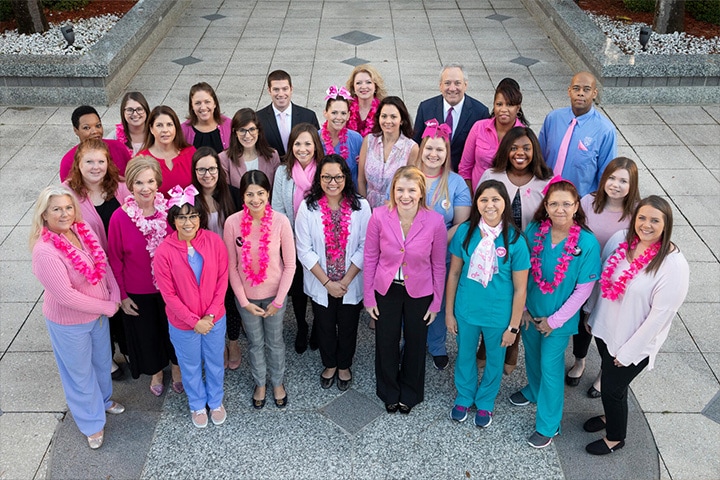
Opportunities to join a variety of groups on campus provide regular social activities and can help enhance your training while connecting with a broad group of peers.
Trainees will have the opportunity to join a Mayo Employee Resource Group (MERG) at any time during their training program. Mayo Employee Resource Groups (MERGs) are employee-led affinity groups to promote belonging, increase cultural awareness, and foster an environment of respect and inclusivity. Any Mayo Clinic employee can join a group of interest and choose their level of involvement
Well-being
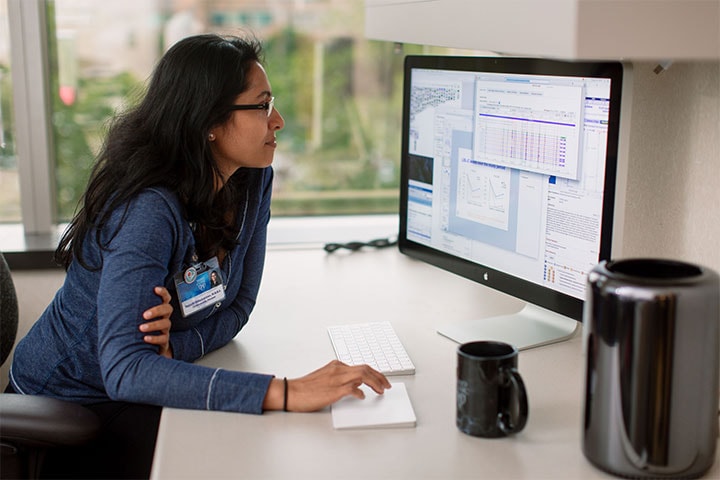 The Office of Academic Support and Well-Being provides resources to promote academic, emotional, social, cognitive, financial, and physical well-being. Career and academic services include academic advising, peer tutoring, and accommodations for learners with disabilities or health conditions. Mental health services, counseling, interview practice, and a variety of enrichment sessions on topics like budgeting, resiliency, and stress and burn-out are also available through the Academic Support and Well-Being office.
More from Mayo Clinic School of Graduate Medical Education
/0x0:512x512/prod01/channel_2/media/mccms/content-assets/academics/residencies-and-fellowships/3319834_0363-512X512.jpg)
Choosing Mayo Clinic
/0x0:512x512/prod01/channel_2/media/mccms/content-assets/shared-documents/campus-FL-Jax_Davis_Bldg_Mar2003_R-pic-tile.jpg)
Jacksonville, FL
/0x0:512x512/prod01/channel_2/media/studio-sites/mccms-reference-guide/512X5121676671_3824027_0010_C.jpg)
Stipend and benefits
Mayo Fellows Association (MFA)
The Mayo Fellows Association (MFA) offers a peer and social support network for residents and fellows and their families with social events, athletics, and advocacy. The MFA also holds an annual resident and fellow appreciation event open to all trainees with complimentary massages, stress-reducing activities, and social support.
/0x0:440x220/prod01/channel_2/media/mccms/content-assets/campus--community/florida/440X220_sidebar-mayo-clinic-jacksonville-fl-shu244045420.jpg)