
Ground EMS
The EMS fellow will work primarily with Mayo Clinic Ambulance Service (MCAS) and Rochester Fire Department (RFD) in Rochester, Minnesota.
Mayo Clinic Ambulance Service ground transport is an advanced life support service. It provides high-quality emergency medical care at the scene of traumatic and medical emergencies. The service also provides care during transport to and between medical facilities. MCAS ground operations respond to more than 70,000 emergency calls for service each year.
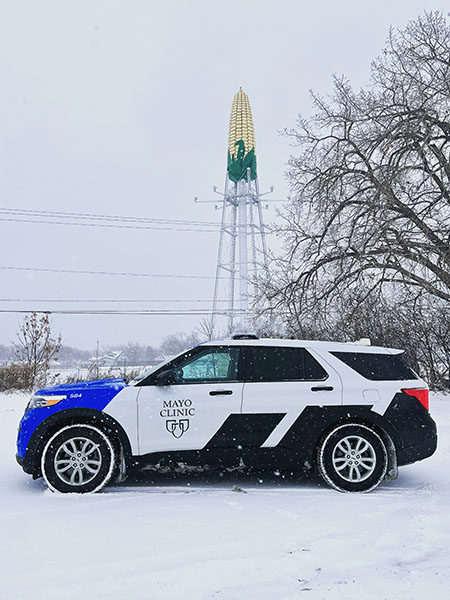 Mayo Clinic Ambulance ground operations are led by a team of registered paramedics and emergency medical technicians. The team provides advanced life support care and transport throughout much of the region. Mayo Clinic paramedics have advanced training and equipment to perform several medical interventions. This includes interpreting ECGs to confirm ST elevation myocardial infarction (STEMI).
Mayo Clinic Ambulance Service ground ambulance serves communities throughout Minnesota and Wisconsin. Minnesota locations include Albert Lea, Austin, Duluth, Fairmont, Litchfield, Little Falls, Mankato, Owatonna, Plainview, Rochester, and St. Cloud. Wisconsin locations include Barron, Eau Claire, Osseo, and Superior.
The EMS fellow supports MCAS and community first responders in a dedicated physician response vehicle. Fellows play an active, hands-on role in prehospital care and provide on-scene medical direction.
Community Paramedicine service
Mayo Clinic Ambulance’s Community Paramedic service delivers high-quality primary care and medical evaluations. Care is provided to low, medium, and high-acuity patients. Services are delivered in a variety of clinical and community settings. Major functions include health assessments and chronic disease monitoring. They also include patient education, medication management, and immunizations and vaccinations. Additional services include laboratory specimen collection, hospital discharge follow-up, and minor medical procedures. Additionally, Community Paramedics help run a medical clinic at the local day shelter. The clinic serves Rochester’s undomiciled population three days each week. The EMS fellow is welcome to be involved in the Community Paramedicine program.
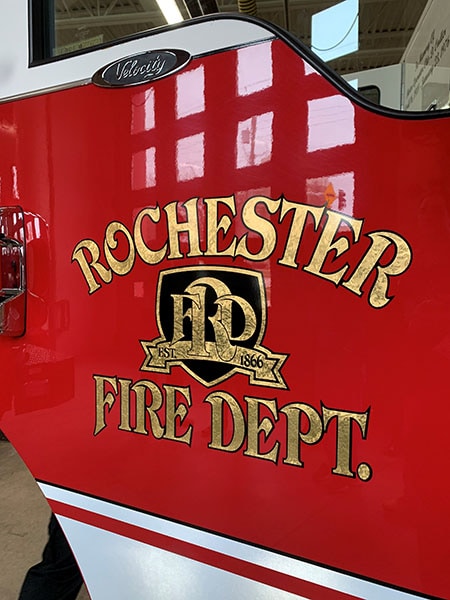 Rochester Fire Department (RFD)
Rochester firefighters are nationally registered Emergency Medical Technicians (EMTs). They respond to more than 5,000 medical emergencies each year. These emergencies include vehicle crashes, cardiac arrests, falls, and other medical conditions. Every apparatus is equipped with an Automated External Defibrillator (AED). Early defibrillation has greatly improved survival rates for witnessed cardiac arrest victims in Rochester.
The fellow can ride along with RFD and participate in operational training. Fellows also attend monthly EMS group meetings with the medical director and a cadre of firefighters.
Surrounding EMS agencies
In addition to providing online and offline medical direction to Mayo Clinic Ambulance Service, EMS fellows work with surrounding EMS agencies. Fellows choose one non-hospital-affiliated agency to serve as an assistant medical director during the fellowship. They provide on-scene mutual aid in the physician response vehicle and offer medical direction. Fellows also respond to care feedback, patient follow-up requests, and educate crew members through skills training and topic-based instruction.
/prod01/channel_2/media/mccms/content-assets/academics/residencies-and-fellowships/emergency-medical-services-fellowship-minnesota/1024X512_SE-MN-EMS-agencies-vehicles-IMG_9634.jpg)
Southeastern Minnesota Emergency Medical Services (SEEMS)
The EMS fellow has the opportunity to work with Southeastern Minnesota Emergency Medical Services (SEEMS), which provides protocols and education to smaller rural EMS agencies.
The Southeastern Minnesota Regional EMS program ensures quality patient care across its 11-county region. It does so by maximizing the response capabilities of emergency medical personnel. The program also promotes injury prevention and appropriate responses during medical emergencies.