
Curriculum
/prod01/channel_2/media/mccms/content-assets/academics/residencies-and-fellowships/emergency-medicine-residency-minnesota/size-1024X512_Emergency-Med-residents-WF382566_0040.jpg)
Rotations
Our residents benefit from challenging and robust clinical rotations throughout Mayo Clinic’s network of campuses to enrich their education. These unique opportunities will allow you to excel and thrive in any emergent situation. Whether you are at our Rochester campus, working on a longitudinal community shift at a nearby regional hospital or critical access emergency department, or doing an elective at our Arizona or Florida campuses, you will draw on the experiences of world-class educators and the unique blend of foundational emergency medicine cases and highly complex referral center patients to become the best emergency physician you can be.
Our residency is dynamic and responsive to learner feedback and the changing specialty of emergency medicine. Through a commitment to constant improvement, new rotations and electives are created in response to resident desires and growing areas of specialization in our practice.
We also believe that learning in diverse environments and seeing a wide range of patients is critical, no matter where one ends up practicing. Popular experiences include the major academic centers in Jacksonville, Florida and Scottsdale, Arizona but also include regional campuses and international experiences.
Our off-service rotations are of high clinical and educational value. You learn from world experts in their respective fields to translate that knowledge and skill to the bedside of your practice. We spend time on:
- Obstetrics and gynecology
- Orthopedic trauma
- Anesthesiology
- Pediatric intensive care unit
- Anesthesia mixed surgical intensive care unit
- Medical ICU
- Emergency psychiatry
- Emergency neurology
- Emergency medical services
- Emergency ultrasound
Within these rotations, we work with world-renowned faculty who provide an invaluable teaching experience, for which Mayo Clinic has been known since its founding.
First year training rotations (PGY-1)
| Rotation | Length |
|---|---|
|
Intern orientation month (All interns start in the emergency department and share high-yield educational sessions) |
First four weeks of intern year |
|
Emergency medicine (Includes longitudinal pediatric [20% of shifts] and community emergency department shifts) |
21 weeks (including four weeks of nights) |
| Pediatric emergency medicine | 4 weeks |
| Emergency psychiatry consultations (in the emergency department) | 2 weeks |
| Anesthesia |
3 weeks |
|
Mixed surgical ICU and medical ICU |
4 weeks |
| EMS |
2 weeks |
| Ultrasound |
2 weeks |
| Orthopedic trauma emergency department consults |
2 weeks |
| Obstetrics and gynecology | 4 weeks |
| Vacation/trip time | 4 weeks + travel to ACEP as intern group |
Second year training rotations (PGY-2)
| Rotation | Length |
|---|---|
|
Emergency medicine (Including longitudinal pediatric shifts) |
28 weeks (including four weeks of nights) |
|
Emergency neurology consult service |
3 weeks |
| Emergency medicine research/QI |
2 weeks |
| Pediatric ICU | 4 weeks |
| Medical ICU selective |
4 weeks (Sites include La Crosse, Eau Claire, Arizona, or Florida ICU) |
| Elective |
4 weeks |
| Specialty service experiences |
2 weeks |
| Ultrasound |
1 week |
| Vacation/trip time |
4 weeks + paid trips for accepted research presentations or national committee membership |
Third-year training rotations (PGY-3)
| Rotation | Length |
|---|---|
|
Emergency medicine (Includes longitudinal pediatric shifts) |
33 weeks (including four weeks of nights)
|
|
Mixed medical, obstetric, oncologic, surgical ICU |
4 weeks |
|
Electives/selectives (for tracks) |
4 weeks |
|
Specialty services experiences |
1 week |
|
Research/QI |
2 weeks |
|
International/underserved/social emergency medicine selective |
4 weeks |
|
Vacation/trip time |
4 weeks + paid trips for accepted research presentations or national committee membership |
Fourth-year training rotations (PGY-4)
| Rotation | Length |
|---|---|
|
Emergency medicine (Includes longitudinal pediatric, community emergency department shifts, resource, EMS, education shifts, "wild" shifts, and telemedicine/intake) |
37 weeks (3-4 weeks of nights) (Increasing supervisory responsibility with sub-consultant shifts throughout the year) |
|
Pediatric selective |
4 weeks |
|
Trauma or ICU or emergency medicine selective |
4 weeks |
|
Electives/selectives (for tracks) |
5 weeks |
|
Simulation/administrative selective |
1 week |
|
Advanced ultrasound selective |
1 week |
|
Vacation/trip time |
4 weeks + paid trips for accepted research presentations or national committee membership |
Example elective opportunities
- Advanced ultrasound
- Aerospace medicine
- Cardiology consults
- Care of indigenous populations rotations (Winslow Indian Health Care Center and Tuba City Regional Health Care
in Arizona) - Child abuse and neglect clinic/consults
- EMS/flight medicine
- Hospital internal medicine
- Interventional pulmonology
- Lumbar puncture Clinic
- Mayo Clinic in Arizona Department of Emergency Medicine
- Mayo Clinic in Florida Department of Emergency Medicine
- Mayo Clinic Health System Department of Emergency Medicine (multiple sites available)
- Mayo International Health Program emergency medicine/low-resourced regions (scholarship-supported rotations)
- Medical media elective (ABC News)
- Neurology intensive care unit
- Newborn nursery
- Palliative care (emergency department/inpatient/clinic)
- Pediatric emergency medicine
- Pediatric intensive care unit
- Phoenix Children's Hospital emergency medicine
- Radiology
- Regional/national/international trips for research presentation or committee work
- Research
- Simulation
- Sports medicine
- Toxicology
- Transfusion medicine
- Transplant and cardiac intensive care unit (ECMO unit)
Didactic training
Teaching is widely regarded as a strength within our residency program. Tuesdays are our dedicated conference day with five hours of high-yield educational experiences. You are excused from clinical duties during conference hours, except for certain off-service block rotations. The educational curriculum emphasizes engagement, drawing on a variety of educational and learning styles.
Conference days emphasize core content and deliver knowledge utilizing multiple models, including experiential learning, spaced repetition learning, in situ simulation, case-based learning, flipped classroom, and lectures delivered by consulting services and core emergency medicine faculty. Joint conferences with pediatrics, trauma, and internal medicine allow for collaboration and the sharing of cutting-edge knowledge. One hour of lecture is dedicated to departmental Grand Rounds, which are given by experts in a variety of fields within Mayo Clinic, as well as guest lecturers from throughout the world.
A very robust longitudinal curriculum exists for emergency medicine administration, ultrasound guided procedures, orthopedics, electrocardiography, toxicology, quality improvement, health policy, and teaching residents to become educators.
Special clinical education days
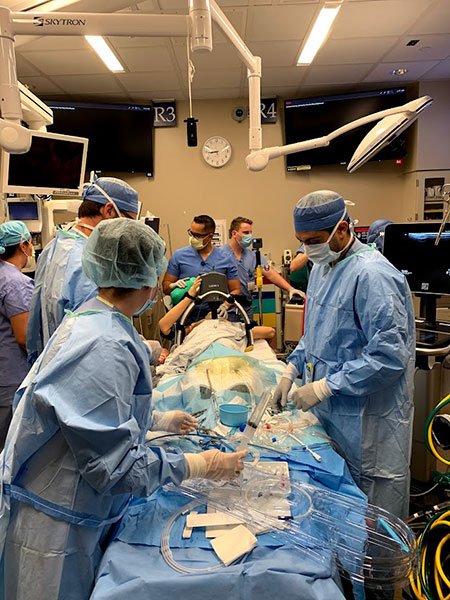 In addition to our innovative didactic curriculum and dedicated simulation days, we host a variety of high-yield, hands-on educational days. The residency engages with our world-class anatomic pathology and cadaver lab for advanced training of high acuity and low frequency procedures. These include cricothyroidotomy, lateral canthotomy, chest tube and pigtail insertion, pericardiocentesis, and thoracotomy.
We spend a separate procedural day in the cadaver lab to master hand procedures. Leading this didactic session are world-renowned hand surgeons at Mayo Clinic who will guide you through best practices so you can take these techniques forward in your own practice.
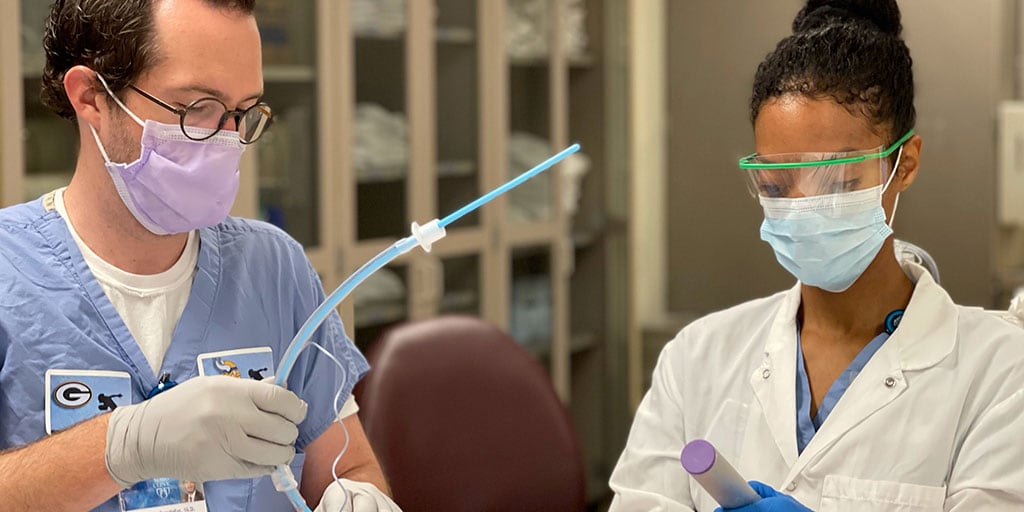
In addition to the above, providing our interns early emergency airway management experience is a priority. Interns undergo a rigorous two-day airway bootcamp at the simulation center. This covers everything from bag mask ventilation and extraglottic devices to direct and indirect laryngoscopy techniques. Subsequently, all residents participate in the same airway course offered to our faculty that provides instruction on the most advanced airway techniques, including fiberoptic intubations and cricothyroidotomy. Residents often have the benefit of attending the course during subsequent years of their training.
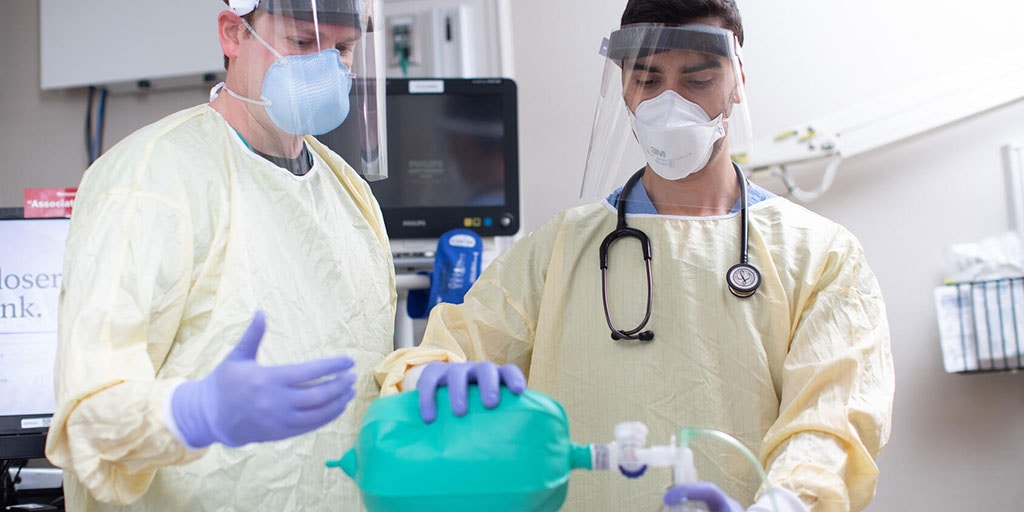
Another highlight of our didactic curriculum is the Beyond ACLS course. This course, taught by emergency medicine faculty and senior residents places junior residents in the team lead role of complex resuscitations in our simulation center to get you ready to take care of anyone, anywhere, anytime.
We also offer an entire day dedicated to experiential learning organized and executed in partnership with other regional organizations to augment EMS experience. Topics covering the four-year rotating curriculum include HAZMAT, structural collapse, closed space and crush medicine, vehicular extrication, burns, inhalational injuries, fireground EMS, rescue taskforce and MCI.
Longitudinal training
We have a core belief that skills are developed through deliberate practice over time. Taking feedback from our residents, we modified much of our single block community rotation to a longitudinal model. This allows residents to work, often one-on-one with faculty, at various lower resource community sites throughout all four years of training. We believe this helps them to prepare to excel in any clinical practice environment.
Our residency also has adopted a longitudinal EMS model. You will be offered opportunities to fly with the flight team, work with our paramedic crews, or ride with our EMS physicians in a dedicated physician response vehicle throughout all years of training.
Resource shifts
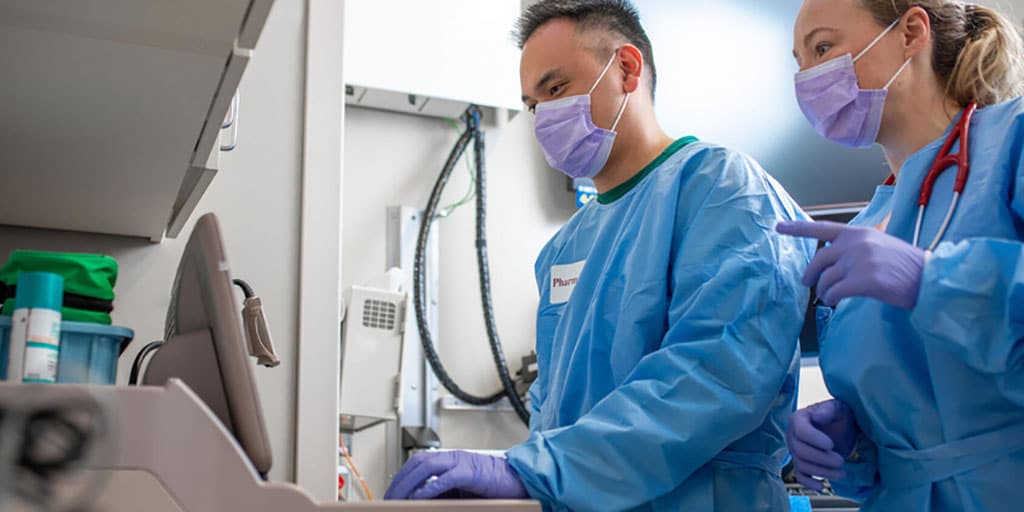
Resource shifts are staffed longitudinally by our senior residents. The resource resident covers a scheduled shift in the afternoon into the evening, the highest volume time in the department, and is available to the entire department. The goals for this shift are to gain increased resuscitation, procedural, ultrasound, sedation, and educational experiences and develop overall global situational awareness of the department. Residents grow immensely and learn how to best support the ever-changing needs of a dynamic department.
Research training
Our goal is that every trainee, regardless of their ultimate career destination, has a clear understanding of how new information is generated, disseminated, and integrated into the practice of medicine. One way we accomplish this is through our research training.
We will aid you in generating ideas and provide all the support to see your project succeed. We have a dedicated research team that will help you develop your methodology, as well as statistical support for your projects. Mentorship can occur from within or external to the department of emergency medicine at Mayo Clinic. We even provide protected research time in your curriculum to focus on your work.
If you see a future in academics, you will have every tool available to assist in your development. Many of our residents publish their work and present at national conferences. A project can be as big or as small as you would like, so things are flexible for those who are ultimately not interested in doing a lot of research in residency. Regardless of your goals, you will leave residency confident in your ability to interpret and apply the most current literature and contribute in a meaningful way to the advancement of emergency medicine.
Journal club
We have a dual purpose for our journal clubs which are hosted in faculty homes. We want to engage our residents through selected articles to move the practice forward through informal, yet engaging discussions regarding research methodology, critical appraisal of literature, or interesting perspectives on clinical questions. In addition, these journal clubs are designed to facilitate relationship building between residents and faculty outside of the clinical environment. We also host multidisciplinary journal clubs involving faculty and residents from other specialties such as surgery, radiology, etc. to further enrich our discussions and strengthen interdepartmental relationships.
Teaching opportunities
As part of your development, you will take on the responsibility of teaching others in your residency. Some residents during their PGY-1 year demonstrate an interest in clinical education and begin to teach medical students as they become comfortable in their role. All residents during PGY-2 year begin to take on graduated educational responsibilities. This will include supervising junior residents as well as medical students. Your development as an educator will occur not only in our clinical areas, but also through numerous didactic opportunities. Residents give several presentations annually and provide procedural education for other residents and medical students as part of formal educational courses. Interested residents can become more involved in the medical school curriculum or take on a leadership track assisting faculty with the emergency medicine clerkship. Residents are recognized as among the best educators in our institution, and several have been awarded the Golden Stethoscope, a Mayo Clinic recognition of residents for exceptional educational contributions.
Evaluation
To ensure you acquire the knowledge and technical skills needed to meet both the personal and program expectations for clinical competency, we evaluate performance and growth in various ways throughout your training. Our shift-based evaluation system, rooted in the ACGME Milestones involves regular feedback from attending physicians. Twice a year, a diverse group of dedicated faculty members convenes as the Clinical Competency Committee to assess and summarize each resident’s overall performance. Program leadership uses this comprehensive review, along with resident self-evaluations and feedback from multidisciplinary colleagues, to collaboratively identify strengths and set goals for continued development toward independent practice.
We actively encourage and incentivize resident feedback on educational experiences and individual faculty members. Committed to continuous improvement, we leverage both formal and informal feedback to enhance our educational offerings and support the growth of our faculty as outstanding medical educators.
We strive to equip you with the resources you need to be successful in residency and beyond. In addition to evaluations, we prepare you for board examinations by providing access to industry leading test preparation packages, such as Rosh Review. This tool helps you build a broad and deep medical knowledge base and refine your test-taking skills over the course of your residency. Additionally, we conduct annual oral board mock exams and incorporate case review in the oral board style into our didactic sessions, offering a low-stress, high-yield environment to build confidence with this exam format.