Pathway Programs designed for healthcare career explorers, aspiring researchers, career changers, and the next generation of leaders in medicine.
Pathway Programs designed for healthcare career explorers, aspiring researchers, career changers, and the next generation of leaders in medicine.
Everyone starts somewhere. Find your path.
Pathway Programs at Mayo Clinic are built to inspire the future of healthcare professionals. Whether you’re exploring options, looking for something new, or taking steps to grow and expand your experience, find a program that fits your passion for patient care, medicine, and research.
Explore a more connected approach to pathway programs that creates clearer, more coordinated routes into healthcare careers through education and lifelong professional growth.
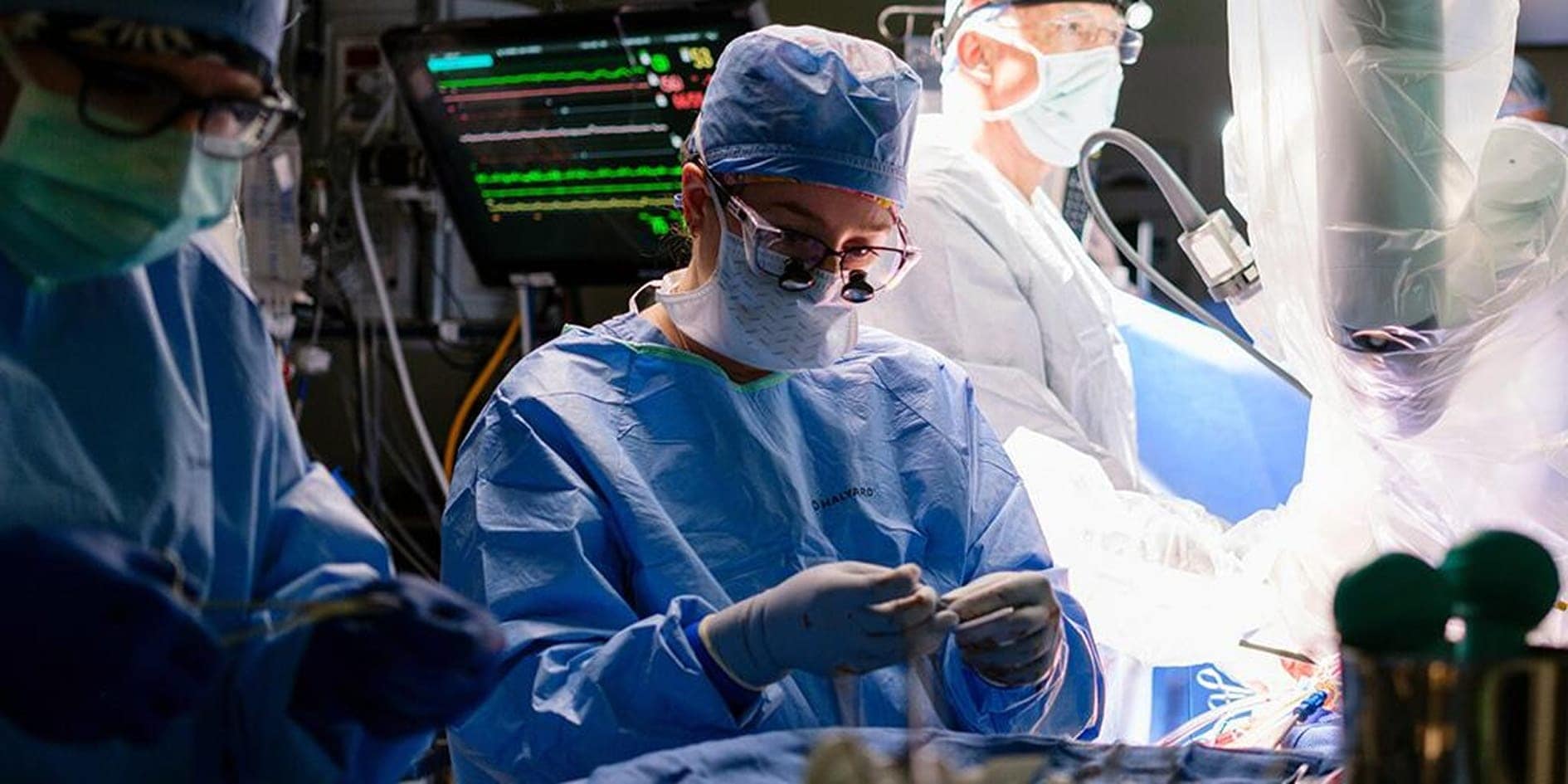
A surgical first assistant, also referred to as a surgical assistant or simply a first assist, works in the operating room during a surgical procedure. They anticipate the needs of the surgical team and during an operation, assist the surgeon with tasks such as selecting equipment, holding open incisions, stopping bleeding, closing the incision, among many other technical tasks.
They are advanced allied health practitioners who provide aid in exposure, wound closure, bleeding control, and other intraoperative technical functions that help the surgeon carry out a safe operation with optimal results for the surgical patient. The surgical assistant performs these tasks under the direction and supervision of the surgeon and in accordance with hospital policy and appropriate laws and regulations.
Scope of practice
Surgical first assistants interact with surgeons, anesthesiologists, nurses, and other health care staff. They work very closely with patients of all ages. They have responsibilities before, during, and after surgical procedures.
Common roles and responsibilities of a surgical first assistant include:
Communicating the surgeon’s preferences and specific patient needs to surgical team
Positioning the patient to provide the necessary exposure for the procedure, as well as the surgeon preference
Providing intraoperative skills such as visualization, trocar insertion, injection of local anesthetics, hemostasis, tissue handling, placement and securing of wound drains, and closure of body planes
Having knowledge of and using all open, laparoscopic, and robotic equipment necessary for a procedure
Proficiency in technical skills required during a surgical procedure, including, but not limited to: clamping, cauterizing, suturing, inserting, injecting, manipulating, retracting, cutting, and ligating tissue as necessary
Utilizing appropriate suturing techniques, according to surgeon preference, to close the incision at the end of the procedure
Providing postoperative skills in patient care such as applying dressings to surgical wounds, patient transfer and transport, transfer of care, and monitoring for immediate complications
Collaborating with others to provide continuity of care
The list above is certainly not comprehensive as the role of a surgical first assistant will vary greatly depending on the surgical procedure, specialty area, and type of facility.
Surgical first assistant vs. surgical technologist
While similar, the surgical technologist and surgical first assistant are two distinct roles. A surgical technologist is responsible for surgical instrumentation, management of the sterile field, and preparation of the operating room. A surgical first assistant is more focused on assisting the surgeon during surgery. Depending on the facility, specific duties may vary between surgical assistants, surgical technologists, and the surgical nurse.
Specializations
This role is needed across virtually all types of specialty surgeries. Depending on the institution or hospital, a surgical first assistant may help with a variety of specialty areas including:
Cardiac
Cardiothoracic
General and colorectal surgery
Neurosurgery
Obstetrics and gynecology
Ophthalmology
Orthopedics
Oral and maxillofacial procedures
Plastic and reconstructive surgery
Transplant
Urology
Vascular
Work environment
Surgical first assistants most often work in hospital operating rooms, outpatient centers, or specialty clinics.
Surgical first assistants work daytime or evening shifts and can be on call for overnight or weekend periods on a rotating basis. This role requires you to be on your feet for long periods during a shift.
Becoming a surgical first assistant
Many employers may look for surgical first assistants who can perform well under pressure, work efficiently with attention to detail, and are open to continuously learning about new surgical procedures and techniques.
Quality surgical assisting programs are identified by earning accreditation from the Accreditation Review Council on Education in Surgical Technology and Surgical Assisting (ARC/STSA), a collaborative effort including the Association of Surgical Assistants (ASA), the American College of Surgeons (ACS), and Subcommittee on Accreditation for Surgical Assisting (SASA), and by Commission on Accreditation of Allied Health Education Programs (CAAHEP).
CAAHEP is a recognized accreditation agency of the Council for Higher Education Accreditation (CHEA). In addition, surgical assisting programs are associated with educational centers that are institutionally accredited by agencies recognized by the United States Department of Education (USDE), The Joint Commission, or a state agency acceptable to CAAHEP and the ARC/STSA.
Admissions requirements for specific surgical first assist training programs will vary. After a high school education or equivalent, some common education requirements and prerequisites include:
Associate degree in allied health field OR
Bachelor's degree in a health-related science
Specific coursework in human anatomy, basic sciences, or microbiology
Applications to the various educational programs can be competitive; enhance your resume by:
Gaining experience in the health care setting with Certified Nursing Assistant (CNA), Phlebotomy, Surgical Core Technician, Emergency Medical Technician (EMT), or other allied health positions
Obtaining and maintaining CPR/BLS certification
Volunteering in hospitals, long-term facilities, or other healthcare settings
Joining in on team-focused activities, such as sports or collaborative organizations
The Bureau of Labor Statistics expects the employment of health technologists, including surgical first assistants, to grow by over 9% by 2030. Advances in medical technology as well as a growing patient population in need of surgical intervention will increase demand for certified surgical first assistants nationwide.
From surgical technologist to surgical first assistant: Many surgical first assistants start as surgical technologist or surgical techs before advancing into the role of a surgical first assistant. To become a surgical first assistant, a surgical technologist would need to have several years of experience in the operating room, meet the prerequisites and educational requirements to apply to and complete an accredited surgical first assistant program, and then pass the exam to become a certified surgical first assistant (CSFA).
From surgical first assistant to physician assistant or registered nurse: The pathway from a surgical first assistant to a physician assistant or registered nurse is not a direct path. To become a physician assistant or registered nurse, a surgical first assistant would first need to ensure they meet the educational requirements and prerequisites needed to attend a physician assistant program or nursing program. After completing an advanced degree and training program, they would need to obtain any necessary certifications needed to practice as a physician assistant or registered nurse.
From surgical first assistant to surgeon: To become a surgeon, a surgical first assistant would need several years of advanced education and additional training. However, their surgical experience will certainly help in their journey. A surgical first assistant would first need to ensure they meet the educational requirements and prerequisites needed to attend medical school. After attending medical school, surgeons must complete several years of residency and possible fellowship before being able to practice as a surgeon.
Surgical first assistant programs at Mayo Clinic
Mayo Clinic offers a one-year Surgical First Assistant Program in Rochester, Minnesota, to prepare students for a career as a Certified Surgical First Assistant (CSFA) and/or Certified Surgical Assistant (CSA). The Surgical First Assistant Bridge Program in Rochester, Minnesota, offers a flexible 9-month pathway for current CSTs to pursue SFA certification. Mayo Clinic also offers a one-year Surgical First Assistant Clinical Rotation in Rochester, Minnesota, for students at affiliated schools.
28%
of graduating students matched with a primary care residency (National Resident Matching Program (NRMP), 2026)
Since Mayo Clinic was established more than 150 years ago, our goal has been to provide outstanding care to our patients and offer superior educational programs that ensure the success of the next generation of medical, scientific, and allied health professionals.
In fact, even our name — Mayo Clinic — comes from this idea. From the beginning, Dr. William Worrall Mayo and his sons, Dr. William J. Mayo and Dr. Charles H. Mayo, invited physicians and students to visit Rochester, Minnesota, and learn about their innovative medical and surgical practice. Visitors coming to observe referred to attending the "Mayos' clinic."
At the same time, the Mayo brothers and their colleagues were distinguished scholars who traveled the world to learn from others and bring back the latest medical developments to incorporate into their own practice. As the Mayo Clinic integrated medical practice grew, the importance of education continued to be a central focus.