
/0x0:512x512/prod01/channel_2/media/mccms/content-assets/academics/residencies-and-fellowships/neurosurgery-spine-fellowship-minnesota/mccms-neurosurgery-spine-fellowship-mobile-1677273_3468870_0006.png)
Overview
The one-year Neurosurgery Spine Fellowship at Mayo Clinic in Rochester, Minnesota, provides a unique opportunity for advanced training across the full spectrum of spinal surgery. With more than 1,500 spine procedures performed each year, fellows gain extensive clinical and operative experience while working closely with five core faculty members who are recognized leaders in their fields. The fellowship also offers opportunities to participate in clinical and translational research.
faculty-to-fellow ratio
hospital in Minnesota and nationally recognized on the Best Hospitals Honor Roll (U.S. News, 2026-27)
neurosurgical spine procedures completed by the department annually
Explore the program
Learn more about the program's accreditation, certification and history
Accreditation, certification, program history
Accreditation
The Neurosurgery Spine Fellowship program is accredited by the Committee on Advanced Subspecialty Training of The Society of Neurological Surgeons as of May 2014.
Certification
After successfully completing the program, you receive a certification of completion in neurosurgery spine training from the Mayo Clinic School of Graduate Medical Education.
Program history
The Neurosurgery Spine Fellowship began in 2014, and the fellowship is offered to one to two trainees each year to ensure that the fellow obtains comprehensive training in all aspects of spinal neurosurgery. Mayo has a long history of neurosurgical education dating back almost 100 years. More than 500 residents and fellows have completed neurosurgical training with the Department of Neurologic Surgery.
Application process
Positions
Two fellowship positions are available each year: one for an external candidate and one for a Mayo Clinic PGY-7 neurosurgery resident completing an enfolded fellowship. Both positions are awarded on a competitive basis.
Qualifications
Applicants for the Neurosurgery Spine Fellowship program must have completed an Accreditation Council for Graduate Medical Education seven-year neurologic surgery program.
Internal candidates (Mayo Clinic PGY-7 resident):
- Residents who are in good academic standing are eligible to complete the fellowship after the completion of their chief resident year.
- Successful completion of the American Board of Neurological Surgery written board examination with a score of 70 percent or better.
- Demonstrated interest in spinal neurosurgery, including academic achievement in spine.
External candidates:
- Must have completed an ACGME accredited residency program.
- Good academic standing as stated in a letter from the applicant's residency program director.
- Perceived to be a future leader in spinal neurosurgery.
Also see general admissions requirements.
How to apply
The academic year begins July 1. External candidates will begin July 8.
The application and all supporting documentation must be submitted by Feb. 1, two years prior to the fellowship start date.
You must apply through Recruit, a third-party application service.
Complete the following steps to apply through Recruit:
- Create an account to begin the online Application for Admission
- All applications to Mayo Clinic School of Graduate Medical Education programs must include these application materials
- After submission, view the required Supplemental Items and Documents
- Upload each required item in the Supplemental Items section (if applicable)
- Complete the Recommendation Request section (if applicable)
Applicants considered for an appointment will be invited for a personal interview with the program director and selected faculty. Interviews are typically conducted between April-June.
Curriculum
Clinical training
The Neurosurgery Spine Fellowship will provide academic, clinical and research training with a wide spectrum of training, including trauma, deformity, degenerative disease, and oncology. It is our expectation that graduates from this program will be fully trained in a breadth of neurosurgical spine conditions.
Rotations
You will rotate amongst our spine faculty throughout the year.
Dr. Clarke’s service:
- Spinal oncology
- Intradural spine tumor
- Primary tumor
- Degenerative spine disease
Dr. Elders’ service:
- Complex deformities
- Regenerative medicine
- Complex spine surgery
Dr. Fogelson’s service:
- Minimally invasive spine surgery
- Complex spine deformities
Dr. Krauss’ service:
- Degenerative spine disease
- Arthroplasty
Dr. Mikula’s service:
- Deformity
- Spine oncology
Didactic training, electives
Didactic training
Didactics play an important role in your fellowship training. You will be required to attend conferences related to neurosurgery/orthopedic spine. Fellows will organize the weekly joint Neurosurgery/Orthopedic Spine Conference.
Electives
Clinical rotations follow the clinical neurosurgery rotation format scheduling. Research electives will involve a mentored research project. Internal fellows will still be required to take chief call. While no call is required of an external fellow, you will still be required to participate in related educational activities.
Elective rotations may be clinical or research-based. All research electives will be supervised by the program director with input from other physicians, depending on project scope.
Conferences, procedures
Conferences
Fellows will participate in the following conferences:
- Weekly Joint Neurosurgery/Orthopedic Spine Conference
- Weekly Multidisciplinary Oncology Conference
- Weekly Case Conference
- Monthly Morbidity and Mortality Conference
- Monthly Spine Trauma Conference
- Monthly Journal Club
Procedures
Committee on Advanced Subspecialty Training procedural requires 150 cases total across the seven categories:
- Craniovertebral junction
- Subaxial cervical
- Thoracic
- Lumbosacral
- Spinal trauma
- Deformity
- Spinal oncology
Over the last five years, graduates of the Neurosurgery Spine Fellowship have averaged completion of 250 operative procedures.
Research opportunities
You are involved in ongoing research projects based on your interest and background to further academic training as well as clinical abilities. These projects are tailored to your future interests and designed to enhance the recruitment of patients to your practice in the future. Two manuscripts are required to be prepared for submission to a peer-reviewed journal.
Teaching opportunities
You have the opportunity to present at grand rounds, clinical case conferences, and national meetings. The program employs the mentorship model and expects fellows to participate in resident teaching and mentoring.
Call frequency, moonlighting
Call frequency
Internal enfolded applicants will continue to take chief call. External candidates are not required to take call.
Moonlighting
Moonlighting is not allowed during your fellowship.
Mentorship, evaluation
Mentorship
You will rotate amongst our spine staff where you will have the opportunity for one-on-one mentorship with individual faculty members. The program director will also provide constant oversight and will review topics like job opportunities, practice building, establishing research opportunities, and obtaining grant funding, along with clinical teaching and training.
Evaluation
To ensure that you acquire adequate knowledge and develop the appropriate technical skills to meet program expectations, your performance is monitored carefully during the program. You are evaluated formally by the supervising faculty member after each clinical rotation, and you will meet with the program director to review these evaluations. In addition, you will also regularly evaluate the faculty to ensure that your educational needs are being met.
Facilities and locations
All training will take place at Mayo Clinic in Rochester, Minnesota. Our facilities include state-of-the-art operating rooms, including an intraoperative MRI suite, multidisciplinary clinics, and world-class dissection labs.
Belonging
At Mayo Clinic, we foster an inclusive working environment and embrace the diversity of all our trainees, faculty, staff, and patients. Our Office of Belonging offers tremendous resources to support our mission of maintaining a welcoming atmosphere for all our employees, including our learners. We strive to provide culturally appropriate care and do our part to reduce healthcare disparities.
/0x0:1440x480/prod01/channel_2/media/studio-sites/mccms-reference-guide/1440X4801573348-380187-2-0024.jpg)
5:33
Video: See yourself at Mayo Clinic
From the program director
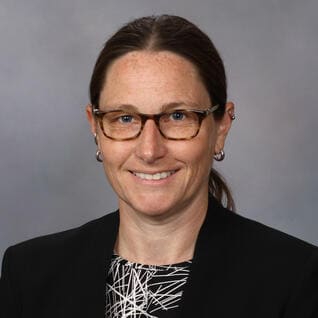 The Neurosurgical Spine Fellowship at Mayo Clinic in Rochester, Minnesota, is a one-year clinical fellowship designed to provide graduates of Accreditation Council for Graduate Medical Education-accredited neurosurgical residency programs with advanced experience in the diagnosis and management of complex spinal disorders. Applicants should have a strong interest in pursuing an academic career dedicated to advancing the care of patients with spinal disease.
The fellowship year is spent working closely with me and my colleagues, Drs. Krauss, Fogelson, Elder, and Mikula. Our practice offers exceptional operative volume and complexity, providing fellows with extensive exposure to adult spinal deformity, degenerative disease, spinal oncology, trauma, and minimally invasive spine surgery. This breadth of clinical experience allows fellows to develop expertise in the evaluation, surgical management, and longitudinal care of patients with complex spinal disorders. Fellows also work closely with colleagues across multiple specialties, including orthopedic spine surgery, oncology, neuroradiology, and rehabilitation medicine, gaining experience in the multidisciplinary care of complex spine patients. The combination of a high-volume surgical practice and a collaborative academic environment provides outstanding opportunities for fellows to conduct high-quality clinical research and contribute to advances in spine surgery.
Our goal is to develop confident spine surgeons with sound clinical judgment, refined technical skills, and the experience to manage the full spectrum of spinal pathology. In turn, we hope to learn from the perspectives and techniques that fellows bring from their neurosurgical training. Together, we aim to provide exceptional patient care, contribute to advances in spine surgery, and create a rewarding fellowship experience.
M.J. Clarke, M.D., Ph.D.
Neurosurgery Spine Fellowship Program Director
Department and faculty
The Department of Neurosurgery at Mayo Clinic in Rochester, Minnesota, is one of the largest and most highly regarded in the U.S. Each year, the entire spectrum of neurosurgical conditions and diseases is treated essentially at one site, which ensures an unparalleled training experience. The department performs approximately 5,000 neurosurgical procedures each year.
This caseload includes more than 1,500 spinal procedures each year. The entire spectrum of neurosurgical spine disorders, ranging from straightforward to complex, is treated at our site in a multidisciplinary fashion. This allows fellows to not only develop clinical and technical proficiency but also provides an opportunity to develop the necessary skills to develop multidisciplinary programs in their own practice after completion of the fellowship.
Meet the faculty
We have five core faculty who are highly regarded figures in spinal neurosurgery as master clinicians, educators, and researchers. Their expertise encompasses all aspects of spinal neurosurgery, and their commitment to training and mentorship is unparalleled. As a group, they hold multiple highly coveted research grants, are PIs on cutting-edge clinical trials, and hold leadership positions in organized neurosurgery.
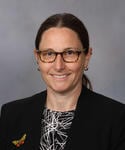 |
Michelle Clarke, M.D., Ph.D.Program Director Professor of Neurologic and Orthopedic Surgery Dr. Clarke received a BSE in mechanical and aerospace engineering from Princeton University and an M.D. from Georgetown University. She completed her residency in neurological surgery at Mayo Clinic and a fellowship in complex spine surgery at Johns Hopkins University. Dr. Clarke specializes in complex spine surgery and spinal oncology. Her clinical practice includes primary and metastatic spine tumors, spinal cord tumors, spinal vascular lesions, complex spinal reconstruction, and other degenerative spinal disorders. She emphasizes helping patients understand their conditions and determine the most appropriate course of treatment, including referral for nonsurgical management when appropriate. In addition to her clinical practice, Dr. Clarke is an internationally recognized researcher and is deeply involved in medical education. Her academic interests include spine surgery, spinal oncology, surgical education, competency-based assessment, and bioethics. |
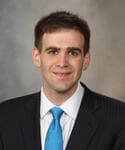 |
Benjamin Elder, M.D., Ph.D.Professor of Neurosurgery, Orthopedics, and Biomedical Engineering Dr. Elder serves as consultant, chair of research, and associate residency program director in the Department of Neurological Surgery, with a joint appointment in physiology and biomedical engineering. A graduate of Yale University, Rice University, and Baylor College of Medicine’s combined M.D./Ph.D. program, Dr. Elder completed his neurosurgery residency and advanced spine fellowships at Johns Hopkins University. His clinical expertise centers on adult spinal deformity, complex spine surgery, and idiopathic normal pressure hydrocephalus, while his research focuses on bone health optimization, spinal biomechanics, and tissue engineering approaches to spinal degeneration. Dr. Elder has authored more than 260 peer-reviewed publications, delivered over 120 invited lectures worldwide, and serves on multiple editorial boards and national leadership committees. Recognized for excellence in clinical care, research, and education, he has received numerous honors, including the 2025 Top Spine Abstract Award from the American Academy of Neurological Surgeons, and was inducted into the prestigious American Academy of Neurological Surgery and the Society of Neurological Surgeons. |
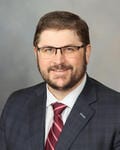 |
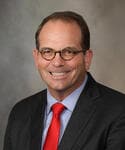
Jeremy Fogelson, M.D.Professor of Neurosurgery Assistant Professor of Orthopedic Surgery |
 |
William Krauss, M.D.Professor of Neurological Surgery Dr. Krauss received a BA in biology from Harvard College. He received an M.D. from Columbia University. He did his residency in neurological surgery at the Neurological Institute of New York and a fellowship in complex spine surgery at the Medical College of Wisconsin. He is a member of the American Academy of Neurological Surgery, and the Society or Neurological Surgeons. Since 1993, he has been a consultant in the Department of Neurological Surgery. He specializes in complex spine surgery, spine trauma, spinal cord tumors, craniocervical disorders, image guided spine surgery, and degenerative spinal disorders. His clinical research involves those areas as well as developing AI tools for clinical practice In addition, he is actively involved in several projects investigating outcomes in spine trauma, spinal oncology, and degenerative spinal disorders. He was the residency program director and the clinical practice chair for the department and the enterprise. |
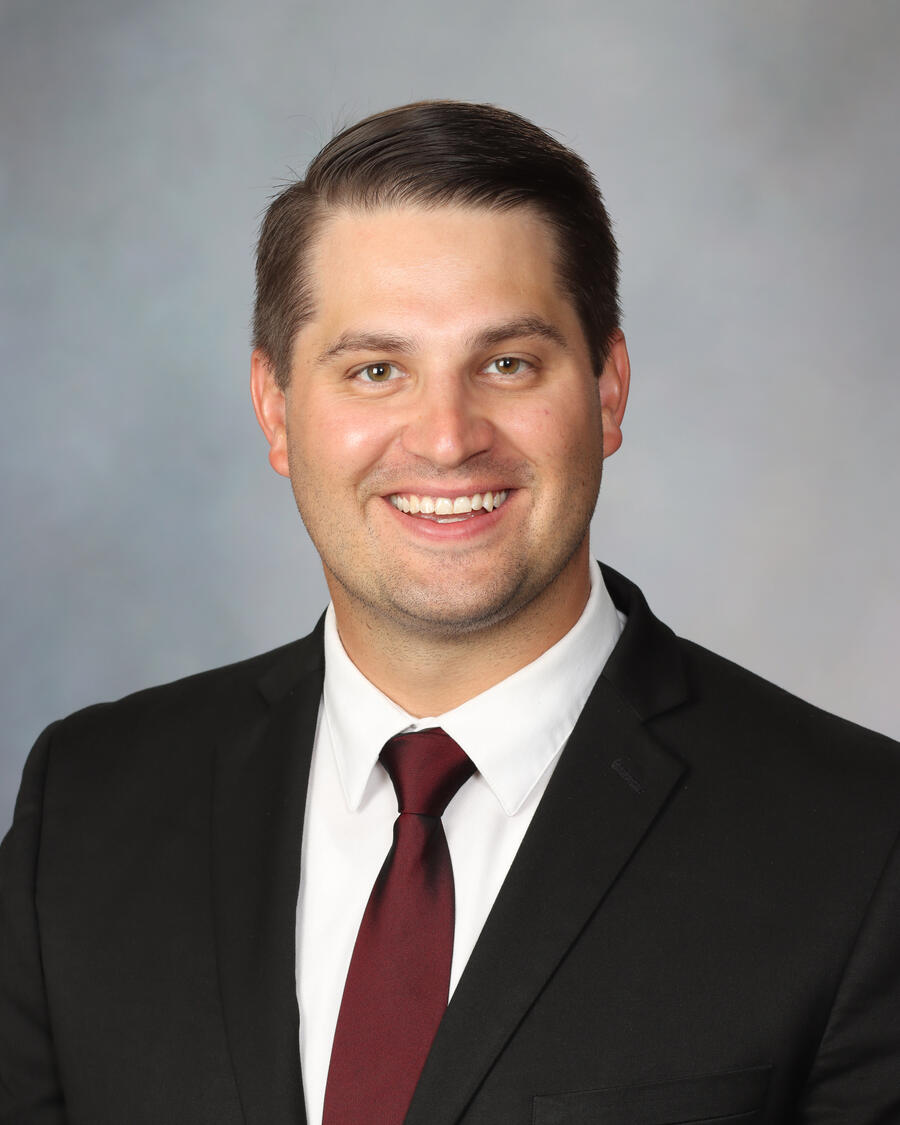 |
Anthony Mikula, M.D.Assistant Professor of Neurosurgery Dr. Mikula is a fellowship-trained spine neurosurgeon specializing in spinal deformity, cervical deformity, and spine tumor surgery. During his neurosurgery residency at Mayo Clinic, he completed fellowships in complex spine surgery, spinal deformity, and spinal oncology at Mayo Clinic and MD Anderson Cancer Center. He then completed a post-residency fellowship in spinal deformity and spine tumor surgery at the University of California San Francisco. He treats adult spinal deformity, including cervical deformity, scoliosis, flat back deformity, dropped head syndrome, kyphosis, and revision spine surgery. He also treats primary and metastatic tumors of the spine and spinal column, including ependymoma, astrocytoma, chordoma, and sarcoma. His research focuses on spine outcomes with the main objective of improving the ability to provide a durable surgical solution for patients that maximizes their function and quality of life while avoiding complications. He actively publishes his work in addition to presenting at meetings and participating in multicenter research groups on a national and international basis. |
Wellness initiatives
As a trainee, your physical and mental health are priorities to Mayo Clinic and the department. Trainees have access to several resources to promote well-being, as well as time off clinical duties to attend appointments.
- Dan Abraham Healthy Living Center
- Groups on campus
- Well-being
Dan Abraham Healthy Living Center
 Trainees have access to the Dan Abraham Healthy Living Center (DAHLC), which is located on both Mayo Clinic campuses (downtown and Saint Marys) in Rochester, Minnesota. This state-of-the-art fitness facility offers basic classes (including free weights, stretching, cardio, and more), drop-in classes, evaluation services, group training, virtual personal training, and virtual wellness coaching.
Membership to the DAHLC is available at a low cost to trainees and their families through payroll deduction.
Video: Dan Abraham Health Living Center
Video: A look inside the Dan Abraham Health Living Center
Groups on campus
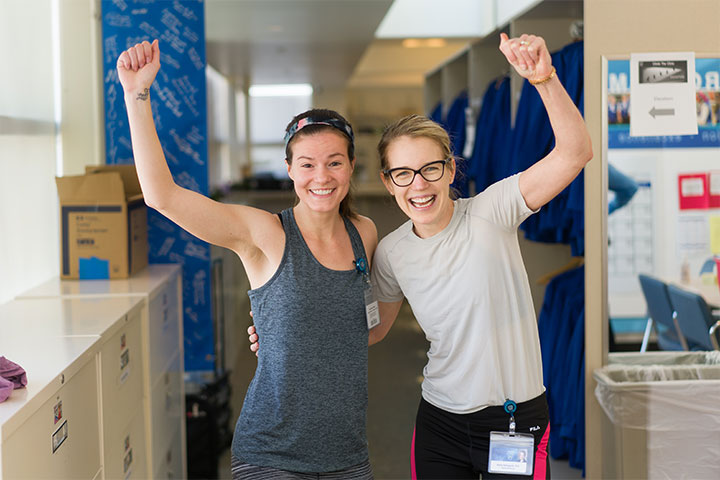 Several groups on campus help you connect with other fellows and their families, such as the Mayo Fellows Association, the Mayo Families' Connection, and Mayo Employee Resource Groups. These groups help enhance your training by providing and organizing wellness initiatives and social activities.
Workshops for spouses and significant others are also available.
Well-being
 The Office of Academic Support and Well-Being provides resources to promote academic, emotional, social, cognitive, financial, and physical well-being. Career and academic services include academic advising, peer tutoring, and accommodations for learners with disabilities or health conditions. Mental health services, counseling, interview practice, and a variety of enrichment sessions on topics like budgeting, resiliency, and stress and burn-out are also available through the Academic Support and Well-Being office.
Mayo Fellows Association (MFA)
The Mayo Fellows Association (MFA) offers a peer and social support network for residents and fellows and their families with social events, athletics, and advocacy. The MFA also holds an annual resident and fellow appreciation event open to all trainees with complimentary massages, stress-reducing activities, and social support.
More from Mayo Clinic School of Graduate Medical Education
/0x0:512x512/prod01/channel_2/media/mccms/content-assets/academics/residencies-and-fellowships/3319834_0363-512X512.jpg)
Choosing Mayo Clinic
/0x0:512x512/prod01/channel_2/media/mccms/content-assets/shared-documents/campus-MEYR6203-pic-tile.jpg)
Rochester, MN
/0x0:512x512/prod01/channel_2/media/studio-sites/mccms-reference-guide/512X5121676671_3824027_0010_C.jpg)
/0x0:440x220/prod01/channel_2/media/mccms/content-assets/campus--community/minnesota/440X220_sidebar-mayo-clinic-rochester-mn-3554057-0012.jpg)