
Tracks and Pathways
/prod01/channel_2/media/mccms/content-assets/academics/residencies-and-fellowships/internal-medicine-residency-arizona/mccms-internal-medicine-residency-az-tracks-1024X512.png)
Our residency offers both tacks and pathways to help residents customize their training. Tracks are longitudinal, multi-year learning programs that residents can elect to pursue throughout their training. Pathways are optional, year-long programs that allow residents to deepen expertise in a particular focus. Both are entirely optional and resident-directed, allowing you to shape your residency experience around your individual goals and interests.
Tracks
Primary Care Track
The Primary Care Track is designed to enhance the outpatient experience of residents planning a career in ambulatory general medicine while still providing a strong inpatient/subspecialty education. The track guarantees participating residents the opportunity to experience key outpatient rotations with fewer inpatient experiences while still providing robust training and individualized learning plan.
Curriculum
Beginning in the PGY-2 year, Primary Care Track resident curriculum will diverge to provide enhanced exposure to rotations specific to a career in primary care, including:
- Pain Medicine
- Ophthalmology
- Women’s Health
- Outpatient Orthopedics
- Psychiatry
- Urology
- Dermatology
Primary Care Track residents will also receive an additional month of dedicated research and/or career planning time in the PGY-3 year, with a highly customizable PGY-2 and PGY-3 schedule that allows for outpatient electives in clinical rotations of your preference.
Additional information
As part of the track, participants are encouraged to work on a research, leadership and/or advocacy project. Primary Care Track residents will be assigned a primary care mentor. Categorical interns may apply for acceptance into the Primary Care Track in early spring of the PGY-1 year to commence in July of their PGY-2 year. Primary Care Track residents will have the opportunity to rotate in various primary care practice settings, including (but not limited to):
- Federally Qualified Health Centers
- Indian Health Services
- Critical Access Hospitals
- Private Practice
Words from participants
 |
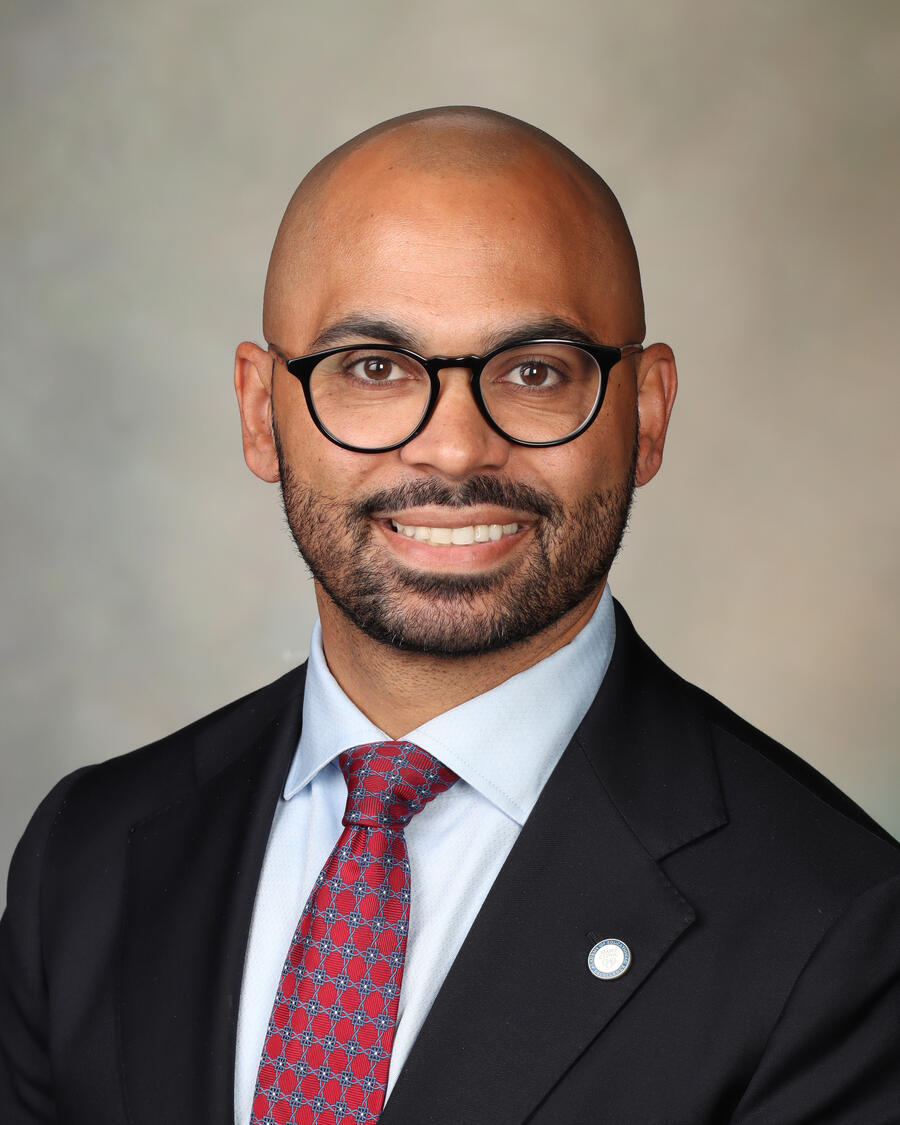
Brian Parker, M.D., M.B.A.Internal Medicine Resident, Class of 2026 The Primary Care Track at Mayo Clinic has inspired me to embrace a bold vision of what primary care can accomplish. While most residency programs teach residents how to manage patients in the hospital, this track goes further—it has equipped me with the skills and knowledge to keep them out of the hospital altogether. At Mayo, the philosophy is simple: just as I tailor medical care to the needs of my patients, my education is tailored to me. There is no other program in the country that customizes your education and empowers you to tackle healthcare's toughest challenges like the Primary Care Track at Mayo does. |
 |
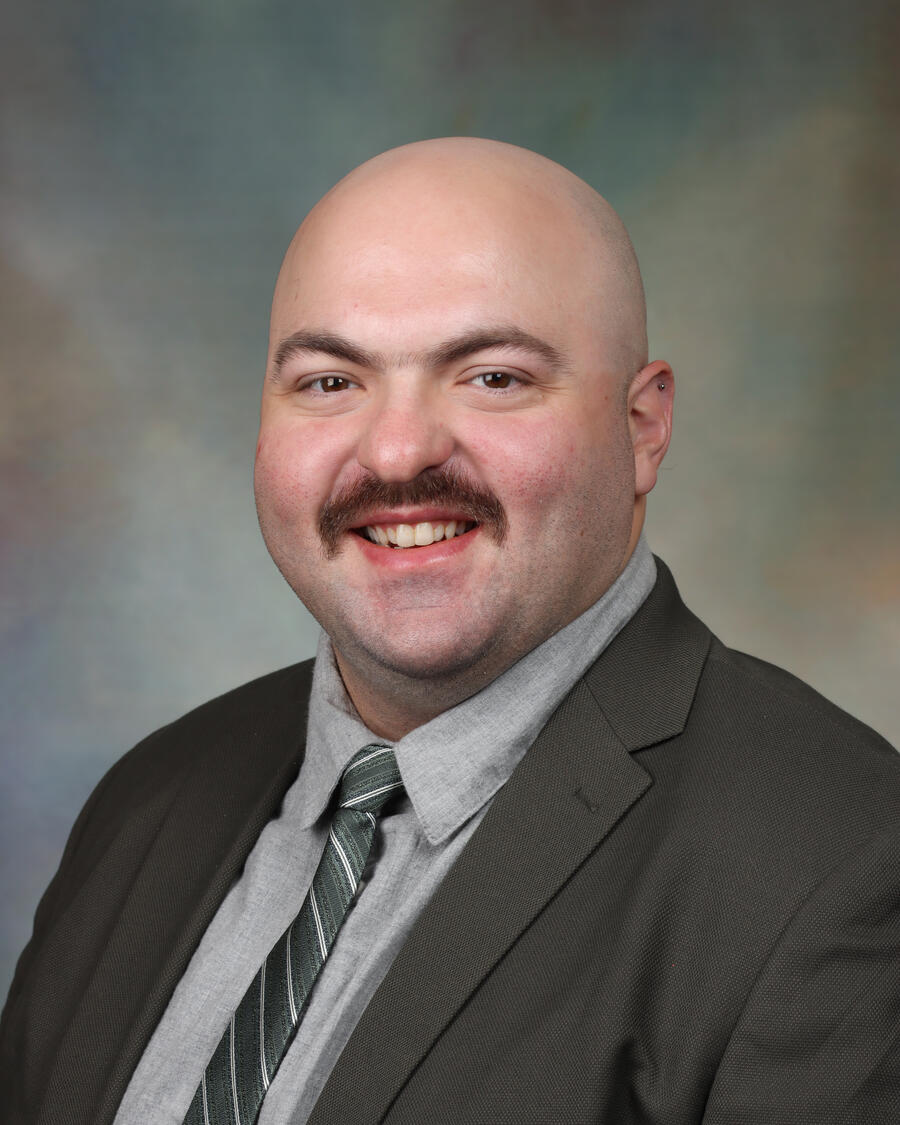
Nathan Delafield, M.D.Current Associate Program Director and Primary Care Track Graduate, Class of 2019 The Primary Care Track equipped me with the skills and experience needed for a successful career in primary care internal medicine, enabling me to begin my journey at a Federally Qualified Health Center (FQHC) before returning to Mayo Clinic Community Internal Medicine. I am deeply grateful for the opportunity to focus on outpatient-based care within the track while refining the competencies essential for excellence in this field. This track also provided valuable exposure to the diverse career paths within primary care, including education, administrative leadership, research, and community engagement. |
 |
Bob Horsley, M.D.Current Faculty and Primary Care Track Graduate, Class of 2019 My first job was providing primary care at a Ryan White-funded clinic for people living with HIV. Mayo Clinic's Internal Medicine Primary Care Track gave me the opportunity to experience specialties we normally don’t see in a traditional Internal medicine residency program, like ophthalmology and dermatology. These rotations provided the experience and tools to diagnose issues like Kaposi Sarcoma, something I never saw clinically prior to my work as an attending at that clinic. In addition, the primary care track gave me these experiences in a way that I did not feel compromised my other Internal Medicine training, and I felt well prepared if I decided to change career paths to hospital internal medicine or fellowship |
Health equity track
The Mayo Clinic Health Equity Track aims to cultivate physician leaders dedicated to advancing health equity through exemplary clinical care, innovative education, community-driven research, and sustained advocacy. This program equips residents with the tools, experiences, and networks necessary to address health disparities and promote justice within healthcare systems and communities.
Curriculum
- Clinical rotations in underserved settings: Residents complete rotations in diverse underserved practice environments, including at least one month at an Indian Health Service (IHS) facility such as Winslow or Tuba City, with opportunities for additional rotations during PGY-2 and PGY-3.
- Health equity certificate through Arizona State University: Residents have the opportunity to earn a Certificate in Health Equity through a partnership with Arizona State University.
- Teaching and mentorship opportunities: Residents participate in curriculum development and teaching for students at the Arizona State University College of Health Solutions and Mayo Clinic Alix School of Medicine, with opportunities to mentor pre-medical and medical students.
- Community-engaged research: Residents collaborate with the Center for Clinical and Translational Science to conduct research that addresses community health needs and improves patient care.
- Dedicated research time: Residents complete at least one month of dedicated research time, with mentorship from Arizona State University and Mayo Clinic faculty.
- Research program participation: Residents attend monthly Kern Center meetings focused on research involving diverse patient populations, perspectives, and healthcare experiences.
- Advocacy and community engagement: Residents engage in local and regional initiatives focused on improving healthcare access and addressing health disparities.
- Longitudinal service project: Residents complete a longitudinal advocacy or community service project aligned with community health needs.
- Community service requirement: Residents complete at least 20 hours of community service during the PGY-2 and PGY-3 years.
Words from participants
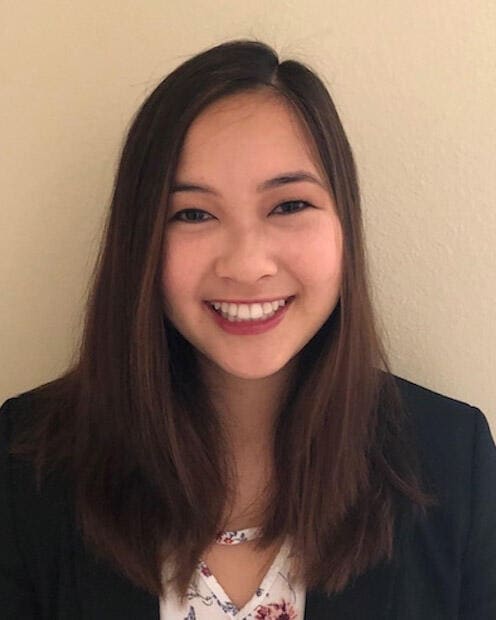 |
Alyssa Ishimoto, M.D.Internal Medicine Resident, Class of 2028 The Health Equity Track at Mayo Clinic enables me to combine clinical care, community engagement, and scholarship focused on reducing health disparities in Arizona. Through this track, I have the opportunity to gain experience in providing culturally competent care to Native American patients while learning about the historical and structural factors that shape health outcomes in tribal communities. The program also offers the opportunity to conduct mentored research on a health equity topic of my interest and collaborate with experts in the field. Through this track, I have also been fortunate to connect with Vitalyst, a nonprofit organization that aims to improve community health in Arizona. With its customizability and vast opportunities, the Health Equity Track enables me to customize my training to address and learn more about the healthcare disparities that affect Arizona’s diverse populations and grow into a well rounded physician. |
Innovation in Medicine Track
The Innovation in Medicine Track is a three-year longitudinal program designed to prepare residents to become physician-innovators capable of identifying unmet clinical needs and translating ideas into meaningful solutions. Running in parallel with Internal Medicine residency training, the track provides progressive education and hands-on experience in design thinking, biodesign, healthcare innovation, and entrepreneurship.
Residents develop their skills through foundational education, participation in the Mayo Clinic Graduate Medical Education Innovation & Entrepreneurship (I&E) Academy, mentorship from physician-innovators and other experts, and completion of a capstone innovation project. No prior innovation or engineering experience is required.
Curriculum
The curriculum builds progressively throughout residency:
- PGY-1 — Build the foundation: Develop foundational knowledge in design thinking, the innovation mindset, biodesign, identification of unmet clinical needs, and formulation of need statements. Residents also identify innovation mentors and prepare for participation in the GME I&E Academy.
- PGY-2 — Develop the toolkit: Participate in the year-long GME Innovation & Entrepreneurship Academy, with training in biodesign, artificial intelligence, market analysis, value proposition development, intellectual property, prototyping, regulatory strategy, funding, and pitch development. Residents also benefit from interdisciplinary networking and exposure to the broader MedTech innovation ecosystem.
- PGY-3 — Apply and translate: Complete an individual or team-based capstone project using biodesign principles to address a real-world healthcare need. Residents apply the skills developed throughout the track to advance an innovation toward implementation.
Track highlights
- Three-year longitudinal curriculum integrated with internal medicine residency training
- Structured training in design thinking and the biodesign process
- Mentorship from Mayo Clinic innovators and subject-matter experts
- Participation in the Mayo Clinic GME Innovation & Entrepreneurship Academy
- Exposure to healthcare entrepreneurship, artificial intelligence, intellectual property, regulatory strategy, prototyping, market analysis, and funding
- Connections to Mayo Clinic and Mayo Clinic-Arizona State University innovation programs and resources
- Hands-on development of a healthcare innovation through a PGY-3 capstone project
- Opportunities to pursue funding, intellectual property protection, and present work to Mayo Clinic leaders and the broader innovation community
/0x0:512x512/prod01/channel_2/media/studio-sites/innovation-and-entrepreneurship-program/aman-verma-512X512-30025432-202011020452.jpg)
Physicians are uniquely positioned to recognize opportunities to improve healthcare because we experience its challenges firsthand. We want residents to leave training not only prepared to practice medicine, but empowered to improve it — with the mindset, tools, and confidence to recognize unmet needs and translate them into meaningful solutions.
Aman Verma, D.O.
Consultant, Hospital Internal Medicine; Internal Medicine Residency, Core Faculty; Director, Innovation in Medicine Track and Pathway
Artificial Intelligence in Medicine Research Track
The Artificial Intelligence in Medicine Research Track is a cutting-edge initiative designed to offer internal medicine residents exceptional training in data science and artificial intelligence. The program provides a strong foundation through a structured curriculum, focusing on essential skills in AI and data science, with emphasis on programming, healthcare data infrastructure, and AI applications in clinical practice.
Residents will engage in longitudinal, mentored research in leading AI and data science labs at Mayo Clinic and Arizona State University, gaining hands-on experience in innovative projects. Additionally, the program offers dedicated career development opportunities, preparing residents to become leaders in the rapidly evolving intersection of medicine and data science technology.
Curriculum
- One Month Dedicated Research Time Each Year: Residents are provided with one month each year to immerse themselves in AI and data science research.
- Elective Options for Track Trainees: Trainees can choose from specialized electives in tracks in Clinical Informatics and Data Science.
- Programming Fundamentals in Python: Develop essential coding skills for AI research.
- Data Infrastructure at Mayo Clinic: Learn how to manage and utilize large healthcare data sets.
- Key Principles of AI in Healthcare: Gain an understanding of how AI can transform clinical practice.
- Deployment and Testing of AI in Clinical Practice: Learn the practical steps to implement and evaluate AI tools in real-world clinical settings.
- Ethics in AI and Healthcare: Address important issues like bias, privacy, and responsible AI development.
- Explainable AI: Understand and communicate complex AI models to patients and colleagues.
- AI for Health Equity: Explore how AI can address healthcare disparities in US and worldwide.
Goals of the track
Residents will demonstrate success as early-career physician-data scientists by achieving milestones such as:
- Longitudinal AI Research Project: Participate in a multi-year research project, culminating in a first-author publication by the end of residency.
- Presentation at a National Conference: Present research findings at national conferences, contributing to advancements in AI and medicine.
- Development of a Data Science/AI Application: Gain practical experience by developing a real-world AI or data science application.
- AI in Medicine Education Initiative: Create content to educate the public about AI in healthcare as part of a patient education or community outreach program.
Words from participants
 |
Samarth Rawal, M.D.Internal Medicine Resident, Class of 2027 Before joining Mayo Clinic, I worked at the forefront of developing generative AI models with applications in healthcare. Now, as the inaugural participant in the AI and Medicine Residency Track, I am excited to elevate my expertise to the next level. The AI in Medicine Track at Mayo Clinic in Arizona combines clinical excellence with physician-engineer collaboration, robust technical infrastructure, and an organization-wide investment in bringing clinical AI innovations to the bedside. I am thrilled at the opportunity to be part of this innovative track and to contribute meaningfully to the future of medical AI, both during my training and throughout my career. |
/0x0:512x512/prod01/channel_2/media/mccms/content-assets/academics/residencies-and-fellowships/internal-medicine-residency-arizona/riaz-irbaz-512x-20539657_20230731.jpg)
Algorithms will read the scans. Our residents will read the room. The AI Track exists so they graduate fluent in both languages — because the best physicians of the next decade will be the ones who can translate between them.
Irbaz Riaz, M.B.B.S., Ph.D.
Senior Associate Consultant; Internal Medicine Residency, Core Faculty; Director, Artificial Intelligence in Medicine Research Track
Pathways
Resident Leadership Academy Pathway
The Resident Leadership Academy prepares you for the leadership and faculty roles ahead. Over 10 sessions throughout the academic year, residents develop practical skills in financial literacy, executive communication, strategic decision-making, and contract negotiation. The program brings together residents who understand that intentional leadership development during training sets them up for success as attendings. It's designed for trainees who recognize that intentional leadership development is critical before transitioning to attending roles.
Words from participants
 |
Taylor Viggiano, M.D.Internal Medicine Resident, Class of 2026 Chief Resident, 2026-2027 The Resident Leadership Academy was one of the most valuable investments I made in my training. Hearing from the great speakers in the Resident Leadership Academy was incredible. Getting direct insights from people who've actually done the work made the content feel real and applicable. I'm already using what I learned to navigate chief year with more confidence and clarity. |
Innovation and Entrepreneurship Academy
Structured as a year-long course across the Mayo Clinic Enterprise, learners will meet with a group of peers for monthly sessions to learn fundamentals and application of innovation skills to take forward in future project ideas, in dedicated innovation fellowships or as Mayo Clinic faculty. The Academy is designed to serve as a bridge for trainees to learn and apply the fundamentals of clinical innovation and entrepreneurship through a longitudinal program. The program will leverage expertise internally and externally on the topics of innovation, commercialization, entrepreneurship, AI, and communication.
Words from participants
 |
Leticia Assad Maia Sandoval, M.D.Internal Medicine Resident, Class of 2027 Clinician Investigator Training Program, Hematology and Oncology My experience with the Innovation & Entrepreneurship Academy has changed the way I think about medicine, innovation, and problem-solving. Through the program, I developed new skills, gained confidence in sharing my ideas, and learned how to turn challenges in healthcare into opportunities for meaningful change. This experience has helped shape the kind of physician I want to become — one who not only cares for patients, but also works to improve the future of healthcare. |
 |
Kevin Chung, M.D.Internal Medicine Resident, Class of 2026 Associate Consultant, Hospital Internal Medicine The Innovation Academy provided invaluable building blocks for my future endeavors. Through this experience, I not only learned the principles and practice of innovation, but also developed meaningful relationships with lifelong mentors who will continue to guide and support my innovative work as an attending physician. |
Clinician Educator Pathway
The goal of the Clinician Educator Pathway is to train clinician educators to be patient-centered clinicians, inspirational teachers, and servant leaders in medical education at Mayo Clinic and beyond. It does this by providing a community for future clinician-educators through small group sessions, peer coaching, innovation, and scholarship.
Curriculum
Trainees are given one day a month to take part in virtual didactics and small groups on various education topics such as education theory, curriculum development, small group teaching, feedback, and so on.
Trainees participate in a capstone project relating to medical education.
Words from participants
 |
Winston Wang, M.D.Internal Medicine Resident, Class of 2026 Chief Resident, 2026-2027 The Clinician Educator Pathway has been one of the most valuable parts of my residency experience. It provided structured opportunities to develop my skills in teaching, curriculum design, and educational leadership while allowing me to apply what I learned directly in my work with medical students and residents. I especially enjoyed the mentorship from faculty educators and the opportunity to complete a capstone project, which allowed me to develop and implement an evidenced-based medicine curriculum for our residency from start to finish. The pathway gave me the tools and confidence to become a more effective educator and explore how I can incorporate medical education into my future career. |