
Meet Austin Hoeg, M.D., M.P.H.
What drew you to Mayo Clinic for your residency training?
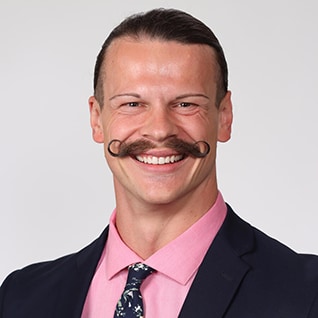 Fit is one of the most important aspects of residency training, and Mayo Clinic was exactly the right fit for me and my family. I had the opportunity to experience the culture here firsthand as a visiting medical student. A lot of places talk the talk when it comes to teamwork and patient-centered care, but Mayo truly walks the walk, and I could immediately see how the culture of humility, collaboration, and compassion translates into patient care that is second to none. I was also drawn to the opportunity to learn from world-renowned mentors while caring for a diverse, medically complex patient population, along with the program’s unmatched support for trainees pursuing academic and research interests.
As a Christian, I know without a doubt that the joy of the Lord is my strength, and Mayo’s Franciscan roots and values deeply resonated with me. Sister Mary Brigh Cassidy, a longtime Franciscan leader at Saint Marys Hospital, once wrote to see each patient as “a human being, a Child of God, whom you are privileged to serve,” and that reflects how I aim to care for each patient as I’m given the honor and privilege of being a part of their story.
On a personal level, Mayo also felt like home. My wife is from Minnesota, and I’ve lived here for over a decade. With three young kiddos and both of our families nearby, Rochester was exactly where we needed to be in this season of life.
What does it look like to participate in advocacy and community outreach during training at Mayo Clinic?
One of the core reasons advocacy and community outreach have been such a meaningful part of my training is that our program recognizes that patient care doesn’t just happen at the bedside. Physicians need a seat at the table when it comes to shaping healthcare policy, improving access to care, and addressing inequities within the system. I was involved in advocacy throughout medical school through the Minnesota Medical Association and the American College of Physicians, and I’ve been grateful to continue that work during residency through opportunities to engage in organized medicine, policy advocacy, and national leadership roles.
To me, when you see something that isn’t right or recognize that change needs to happen, you have a choice: you can either shake your fists at the four walls or roll up your sleeves and do something about it. Mayo has really helped foster that mindset and put wind in my sails to engage in this work.
And here’s the thing — this doesn’t just happen on the national level. Our program places a strong emphasis on investing in, stewarding, and serving the local community. Through our residency curriculum and community service initiatives, residents care for uninsured patients and individuals experiencing homelessness at clinics like Good Samaritan and The Landing, volunteer at Ronald McDonald House Charities, participate in mentorship and outreach programs for local students, and serve the Rochester community during events like Community Service Week.
That combination of advocacy, outreach, and compassionate care has been one of the most rewarding parts of training here, bar none.
What has been your experience moving with a family to Rochester?
Moving to Rochester with our family has been such a blessing for us. My wife and I bought our first home here, and it’s been an amazing place to raise our three children. Rochester is about as livable and family-friendly as a city can be — big enough to have everything you need, from great grocery stores and a global food scene to coffee shops, parks, and community events, while still feeling connected and easy to navigate.
We’ve especially loved the access to the outdoors, and some of our favorite moments have been swimming at the beach, hiking local trails, or biking with the kiddos in the Burley. Whitewater State Park was always one of our favorite spots while living in the Twin Cities, and now that we’re in Rochester, we’re just a stone’s throw away.
Our oldest daughter is loving gymnastics, ballet, and preschool, which has been a wonderful way to build community with other families, and our 2-year-old son is already chomping at the bit to get involved too. We welcomed a little baby girl into the world seven months into residency, and the encouragement and support we’ve received from the program have exceeded anything we could have asked for.
Sister Generose Gervais, the longtime Franciscan administrator of Saint Marys Hospital, once said, “Our most valued assets are our personnel.” Mayo really lives this out, and that’s exactly how it has felt for our family.
What is the camaraderie like among residents?
The camaraderie among residents at Mayo Clinic is special. I’m a big believer in the idea that it’s not just where you are, it’s who you’re with, and while residency is certainly challenging, being in it together with people who genuinely care about and support one another makes all the difference.
Just as quickly as we became friends, we as co-residents became a second family. Even though we have a large program, it never feels impersonal. Throughout all three years of training, we rotate through each month-long block with three other co-residents in our “quad,” so you’re never in it alone, and that really creates a strong sense of community and trust over time. We also have “flocks,” which connect residents across all three years through our associate program directors and add another layer of mentorship, friendship, and support.
A big part of the DNA here is a culture of humility and collaboration, and that fosters a deep sense of trust and teamwork among staff and trainees. There’s a lot of joy in the work we do together, and rallying around one another to take great care of patients side by side brings people together in a really special way. That camaraderie also shows up outside of work, whether it’s team dinners after a month in the ICU, residency-wide fitness challenges, awkward photo contests, or wellness book clubs. All of that makes the camaraderie here feel genuine and deeply supportive, and it’s a reminder that medicine really is a team sport both in and outside the hospital.